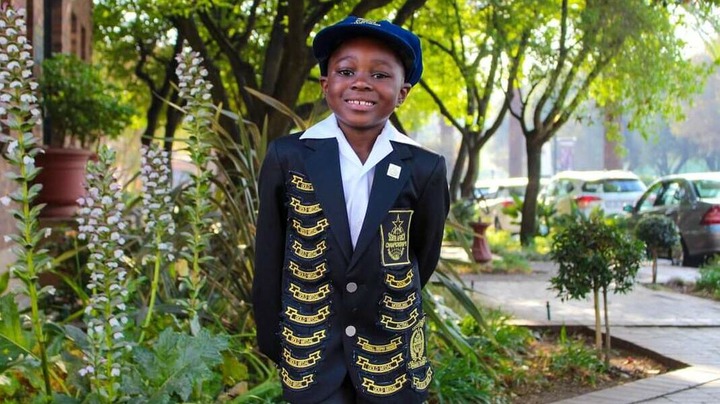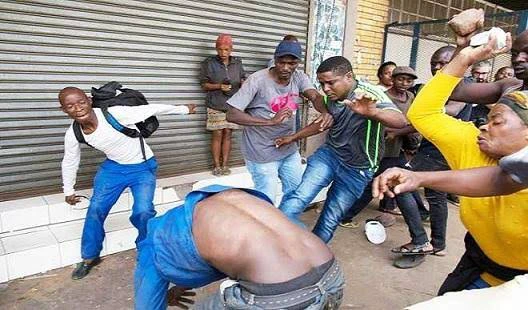
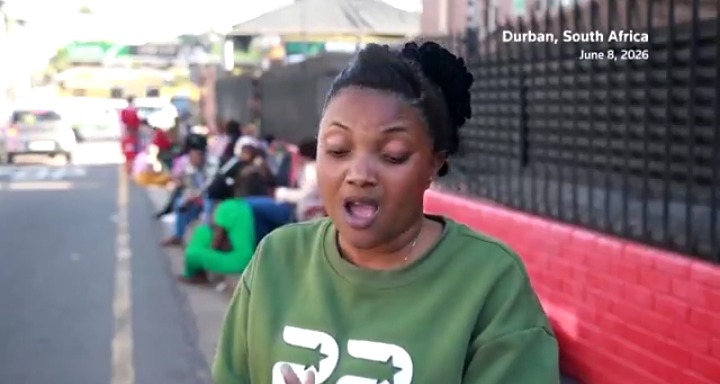
The human cost of the ongoing migration crisis has been laid bare by the plight of a Ghanaian woman and her 14-year-old son, who have been forced to sleep on the streets of Durban after her livelihood was destroyed in a wave of anti-migrant violence.
The woman, who was raised in South Africa and has spent most of her life in the country, operated a hair salon in the Durban central business district. Her business was completely looted and destroyed during coordinated community raids in May, an escalation of the ongoing campaign by local civic coalitions targeting foreign-owned businesses ahead of their self-styled June 30 migration deadline.
Left with no income and unable to afford her rent, she and her teenage son are now among a group of approximately 200 displaced migrants who are sleeping on the pavements outside government offices in the city center. The group is exposed to the elements and growing increasingly desperate as nighttime temperatures continue to plummet.
“I grew up here, this is the only home my son knows, and everything I worked for was destroyed in one afternoon,” she said, wrapping a blanket around her shoulders. “We are not numbers on a spreadsheet; we are human beings. My son should be in school, but instead, he is sleeping on the concrete next to me because people decided we do not belong here.”
The situation highlights the complex reality on the ground, where the violence has disrupted the lives of long-term residents and documented individuals alongside undocumented arrivals. Unlike the thousands of Malawian nationals who have gathered at the Sherwood Hall transit camp to await voluntary repatriation to Lilongwe, many of the displaced people on the city streets have valid legal status but nowhere safe to return.
The growing street encampment has put further pressure on the Department of Home Affairs and provincial authorities. Deputy Minister of Home Affairs Njabulo Nzuza recently noted that while the state is facilitating the voluntary return of those who want to leave, it is also working with the KwaZulu-Natal provincial government to find a pathway for community reintegration for those who hold valid permits and wish to rebuild their lives in South Africa.
However, for those sleeping on the streets, the promises of reintegration feel distant. Human rights organizations have warned that without immediate emergency shelter and psychological support, children and vulnerable individuals caught in this limbo face severe long-term trauma, even as security clusters remain on high alert across the eThekwini metro to prevent further outbreaks of violence.