A Nigerian national has reportedly drawn widespread attention after allegedly refusing to leave South Africa despite claims that he has been living in the country without legal documentation for approximately 15 years.
According to accounts circulating online, the man was approached by authorities over his immigration status and allegedly reacted defiantly, insisting that South Africa had become his home. He was quoted as saying, “Shoot me here! This is my country. I’m gonna die here,” while apparently resisting attempts to remove him from the country.
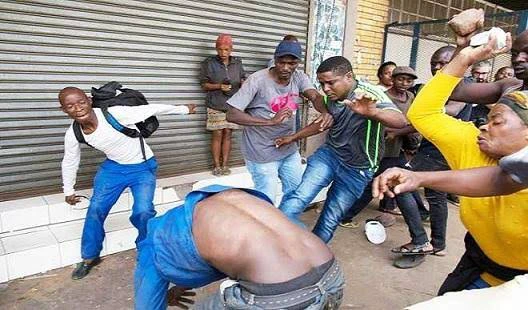
The reported incident comes amid growing tension surrounding immigration in South Africa, where anti-immigrant groups and some community movements have intensified their calls for undocumented foreign nationals to leave the country. In recent months, immigration has remained one of the most controversial public issues, with supporters of stricter enforcement arguing that South Africa must protect its borders and ensure that foreign nationals comply with the country’s immigration laws.
The Nigerian man’s alleged refusal to leave has therefore triggered strong reactions, particularly because he is said to have stayed in South Africa illegally for around 15 years. His reported declaration that South Africa is now his country has further fueled debate over whether long-term undocumented migrants should be removed regardless of how many years they have lived in the country.
Critics of undocumented immigration argue that remaining in another country without valid legal status for such a lengthy period cannot automatically give a foreign national the right to claim that country as his own. Others, however, have raised concerns about the human impact of deporting individuals who may have spent many years building their lives, relationships and livelihoods in South Africa.
The incident is unfolding against the backdrop of ongoing anti-immigrant campaigns demanding stronger action against undocumented foreigners. These movements have repeatedly called on authorities to enforce immigration laws more aggressively and remove people who do not have permission to remain in South Africa.
At the same time, rights advocates have continued to stress that immigration enforcement must be handled lawfully and without violence, intimidation or discrimination.
For now, the man’s exact immigration circumstances and the outcome of the reported encounter with authorities remain unclear. However, his alleged statement has added another dramatic chapter to South Africa’s increasingly heated debate over undocumented immigration, deportation and the question of who has the right to call the country home.