

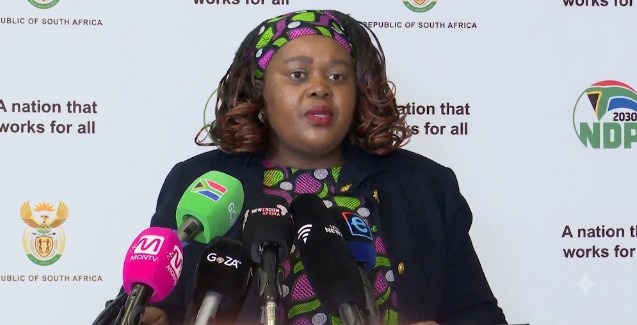
Housing Minister Mmamoloko Kubayi stood her ground during a tense exchange with a Nigerian journalist, delivering a sharp rebuke that reverberated across diplomatic circles on Friday. The senior cabinet member made clear that South Africa would not absorb international criticism without consequence. Her words carried the unmistakable weight of a government that has grown weary of what it describes as unjust targeting from foreign voices. The confrontation unfolded publicly, capturing immediate attention from observers watching the exchange unfold.
Kubayi addressed the journalist directly, stating that the South African government would not tolerate what she characterised as unwarranted attacks from other nations. “We want to reiterate here, as the South African government, that it does not help for all countries to attack South Africa unwarrantedly,” she declared, her tone measured yet firm. She emphasised that elected representatives carried an obligation to shield citizens from external criticism that lacked factual grounding. “We will have to defend ourselves as a country and defend South Africans as their elected representatives,” Kubayi added.
The Presidency has not yet released an official communiqué elaborating on the minister’s remarks, though government insiders confirmed her position aligns with broader ANC foreign policy posture maintained throughout 2024. Officials familiar with internal discussions noted that South Africa’s diplomatic corps has been reviewing its response strategy toward nations perceived as hostile. The Department of International Relations and Cooperation has remained publicly quiet, offering no separate briefing to journalists seeking clarification.
This statement arrives amid ongoing friction between South Africa and several African neighbours over Pretoria’s geopolitical positioning, including its neutral stance regarding the Russia-Ukraine conflict. Nigeria and South Africa have historically maintained competitive yet cooperative ties, though tensions over regional leadership within the African Union have periodically surfaced. Observers tracking bilateral relations suggest underlying frustrations have accumulated over trade disputes and migration pressures affecting both nations.
Kubayi wore a striking burgundy outfit during the exchange, her composure visibly unwavering even as the journalist pressed further with follow-up queries. Bystanders present described the atmosphere as charged — several diplomats nearby shifted uncomfortably, exchanging glances while the minister maintained steady eye contact throughout her response.
What specific remarks from the Nigerian journalist triggered this unusually forthright retaliation remains unclear, raising a question that neither government has yet chosen to answer publicly.


