

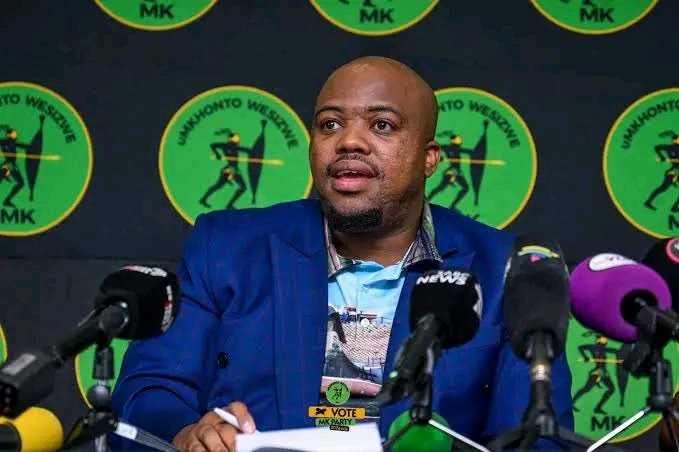
Jacob Zuma’s signature on the official papers authorising the expulsion of senior members Nhlamulo Ndhlela and Duduzile Zuma-Sambudla brought the uMkhonto weSizwe (MK) Party back into the limelight, according to Secretary-General Sibonelo Nomvalo. The public is more interested in how the party leadership dealt with internal disciplinary issues now that this information is public knowledge, and tensions inside the party are on the rise.
When asked about the allegations that he had ordered or started the expulsions, Nomvalo denied them categorically. His position was that Zuma, as president of the MK Party, made the decision personally, he said. The party leader’s decision was simply carried out administratively, according to Nomvalo’s office.
This explanation comes after much conjecture about the identity of the person or people responsible for the dismissal of two prominent party members. Following internal disciplinary hearings, Ndhlela—a former party national spokesperson—and Duduzile Zuma-Sambudla—a prominent party member and daughter of Jacob Zuma—were both ejected. Questions of leadership, responsibility, and unity have been stoked by their expulsion from the quickly expanding political organization.
According to Nomvalo, the party’s constitution gives its leadership the authority to punish party members who violate the party’s beliefs and rules. He denied any involvement of personal or political agendas and insisted that the expulsions had been carried out via the proper channels and in line with established protocols.
Political watchers and supporters of the MK Party have expressed conflicting opinions over the expulsions. Opponents of the move say it shows how divided the party is right before next elections, while supporters say it shows discipline and organisational stability from the leadership.
In light of the recent events and the prominent personalities involved, political experts believe they may have far-reaching effects on the inner workings of the MK Party. The party’s leadership choices and administrative structures have come under increased scrutiny as it is one of the most rapidly expanding political movements in South Africa.
Nomvalo has stated again that the organization’s focus is on enhancing its structures and achieving its political mission, regardless of the controversy. He begged party members to honour the leadership’s decisions and stick with the party’s goal.
The focus will now be on whether the impacted members will contest the judgement or accept it, because Jacob Zuma has been identified as the author of the contentious expulsion orders. As the MK Party deals with its most massive internal conflict to date, the latest developments are sure to keep it front and center in the eyes of the public.


