

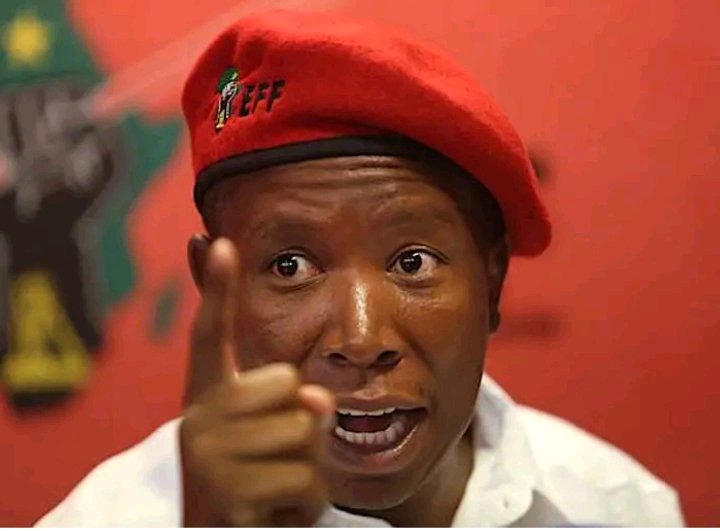
Growing calls for Economic Freedom Fighters (EFF) leader Julius Malema to testify before the Madlanga Commission of Inquiry have emerged after his name was repeatedly mentioned during hearings investigating corruption within Crime Intelligence and state procurement.
The commission has heard evidence suggesting connections between suspended Crime Intelligence official Major General Feroz Khan, businessman Mohammed Sayed, and Malema. Witness testimony has indicated possible coordination and communication between Khan and Sayed during the ongoing inquiry, drawing attention to the EFF leader’s potential involvement.
Despite his name appearing in commission proceedings, no formal charges have been brought against Malema, and the allegations against him remain unsubstantiated. The commission continues its hearings into allegations of corruption and misconduct within Crime Intelligence and government procurement processes.
Supporters of Malema argue that anyone whose name arises during such inquiries should be given the opportunity to respond and clear their name, consistent with principles of due process and natural justice. They maintain that procedural fairness requires allowing affected parties to address allegations directly.
Journalist Micah Reddy has expressed doubt that Malema will ultimately be called to testify before the commission. Reddy suggested that if summoned, the EFF leader might use the platform to advance his political agenda rather than provide straightforward answers to the commission’s questions.
According to Reddy, Malema possesses strong oratory skills and could potentially leverage the proceedings to “spin the narrative” and sway public opinion. The journalist raised concerns that the EFF leader might divert attention from the evidence being examined to focus on his own political messaging.
The question of whether to call Malema presents a delicate balancing act for the commission. On one hand, procedural justice demands that individuals implicated in evidence be given an opportunity to respond. On the other, there are concerns that high-profile political figures could use such platforms to create spectacles that undermine the inquiry’s seriousness.
The Madlanga Commission continues to evaluate documentary evidence and hear testimony from multiple witnesses. Investigators are assessing whether additional witnesses, including possibly Malema, should be summoned based on the relevance of their potential testimony to the inquiry’s findings.
The case has attracted significant public attention due to its political and legal implications. The commission’s findings could have far-reaching consequences for those implicated in corruption allegations within law enforcement and state procurement systems.
It remains important to note that all individuals named in the inquiry are presumed innocent unless proven guilty through proper legal processes. The allegations remain under investigation, and no conclusions should be drawn until the commission completes its work and releases its final report.
The commission has yet to announce whether Malema will be called to testify. Any decision will likely depend on the weight of evidence gathered and whether his testimony is deemed essential to the inquiry’s objectives. As hearings continue, South Africans will be watching closely to see how this politically charged matter unfolds.


