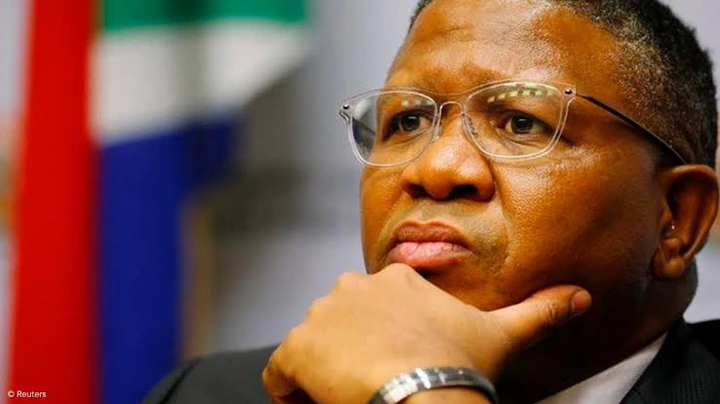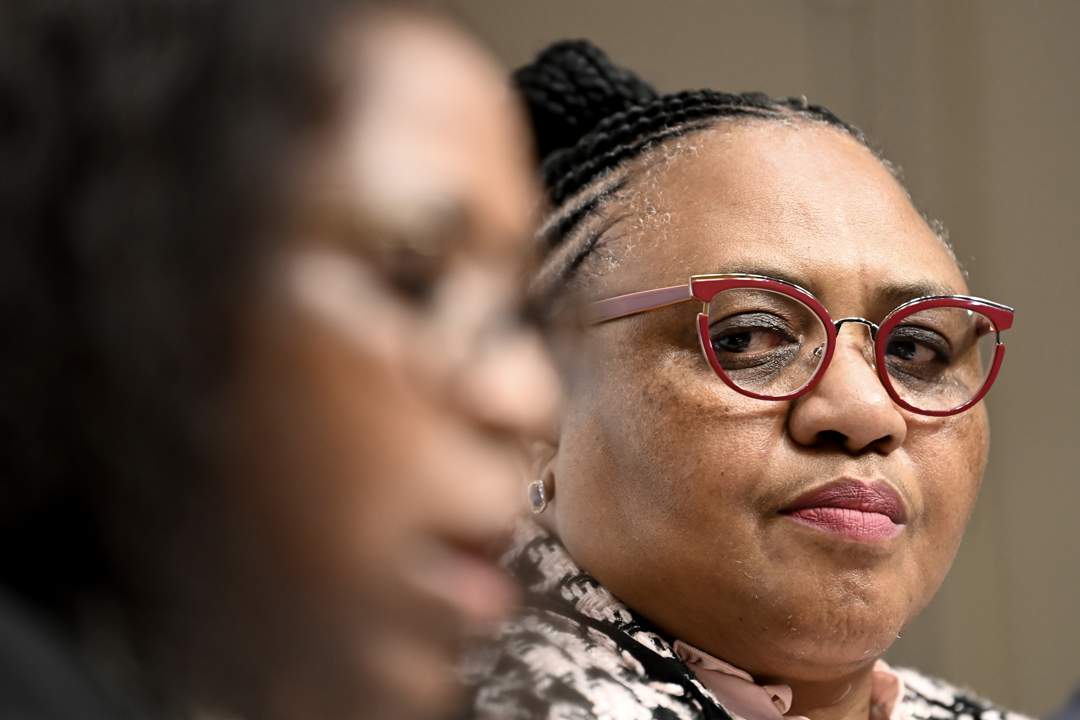
National Assembly Speaker Thoko Didiza has explained why she opted not to join President Cyril Ramaphosa’s legal challenge aimed at stopping Parliament’s Phala Phala impeachment process, stating that the matter now falls within the jurisdiction of the committee established to investigate the scandal.
Didiza made the remarks amid ongoing legal and political debates surrounding the Phala Phala controversy, which has remained one of the most closely watched issues in South African politics. The scandal relates to allegations surrounding the theft of foreign currency from President Ramaphosa’s Phala Phala farm in Limpopo and the subsequent handling of the incident.
Addressing concerns over her decision, Didiza said the National Assembly had already fulfilled its constitutional responsibilities by establishing an impeachment committee to deal with the matter. As a result, she believes the process should now be allowed to proceed independently through the structures created by Parliament.
“The matter is now before the committee appointed by the National Assembly,” Didiza indicated, emphasizing that the committee has been entrusted with the responsibility of examining the allegations and determining the appropriate course of action.
Her comments come after Ramaphosa launched legal proceedings seeking to halt aspects of Parliament’s impeachment process. The President has argued that there are legal and procedural concerns that warrant judicial intervention. However, Didiza maintained that once Parliament had constituted the committee, it became the primary body responsible for handling the investigation.
Political analysts have noted that the Speaker’s stance reflects an effort to preserve the independence of parliamentary processes and avoid perceptions of interference by the office of the Speaker. By distancing herself from the President’s court action, Didiza appears to be reinforcing Parliament’s role as an institution capable of overseeing matters involving the executive.
The impeachment committee is expected to assess evidence and submissions related to the Phala Phala matter before making recommendations to the National Assembly. Its findings could have significant political implications depending on the conclusions reached.
Opposition parties have continued to push for accountability regarding the allegations, while Ramaphosa and his supporters have maintained that the President has acted within the law and should be afforded due process.
As the legal and parliamentary processes unfold, attention will remain focused on both the courts and the impeachment committee, whose work is expected to play a pivotal role in determining the future trajectory of the Phala Phala saga.