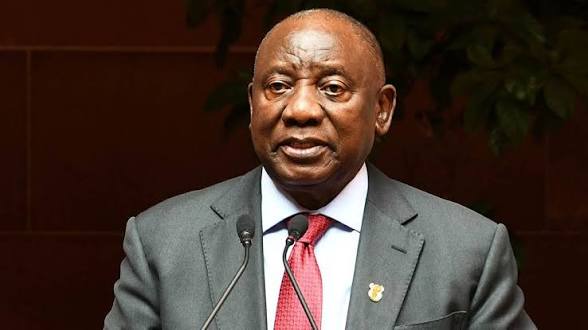
President Cyril Ramaphosa’s attempt to halt Parliament’s looming impeachment inquiry has sparked a fresh political and constitutional battle, with the chairperson of the parliamentary committee responsible for the process making it clear that the investigation cannot simply be stopped because the president disagrees with a court ruling.
The development has added a dramatic new chapter to the long-running Phala Phala controversy, a matter that has continued to cast a shadow over Ramaphosa’s presidency and fuel fierce debate across South Africa’s political landscape.
At the centre of the latest dispute is Parliament’s planned inquiry into allegations linked to the Phala Phala farm scandal. The inquiry follows legal and constitutional processes that were set in motion after questions were raised about the handling of a large sum of foreign currency allegedly stolen from Ramaphosa’s game farm in Limpopo.
Reports indicate that Ramaphosa has sought to challenge the process, arguing that there are legal grounds to reconsider the Constitutional Court ruling that paved the way for Parliament’s next steps. However, the chairperson of the parliamentary committee tasked with overseeing the inquiry has pushed back strongly against suggestions that the process can be paused or abandoned.
According to the committee leadership, Parliament has constitutional obligations that cannot be ignored. Once the Constitutional Court has spoken and Parliament has been directed to act, lawmakers are expected to carry out their duties regardless of political pressure or objections from those affected by the process.
The committee’s stance signals that preparations for the inquiry are expected to continue despite Ramaphosa’s efforts to stop it. This creates the possibility of a direct confrontation between the presidency and Parliament over the interpretation of constitutional responsibilities.
Political observers say the latest developments could have significant consequences not only for Ramaphosa but also for South Africa’s democratic institutions. The dispute raises broader questions about the balance of power between the executive branch and Parliament, as well as the extent to which court decisions can be challenged once implementation processes have begun.
Opposition parties have already seized on the committee’s position, arguing that the inquiry should proceed without delay. Several political groups maintain that Parliament must fully examine the allegations surrounding the Phala Phala matter in order to protect public confidence in government accountability.
Supporters of the president, however, have argued that Ramaphosa is entitled to pursue every available legal avenue and that concerns about procedural fairness should be carefully considered before any inquiry moves forward.
The renewed clash comes at a politically sensitive time for South Africa, where coalition politics and growing public scrutiny of government institutions have intensified debates about accountability and constitutional governance.
As the standoff unfolds, attention is now focused on whether Ramaphosa’s legal efforts will gain traction or whether Parliament will press ahead with the inquiry despite the president’s objections.