
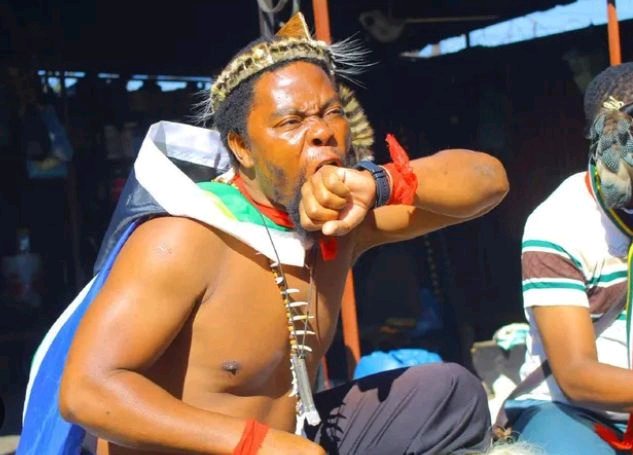
A South African activist known as Phakel’umthakathi Ndabandaba has come under intense scrutiny after making controversial remarks about former President Nelson Mandela and foreign nationals living in South Africa. The comments, which circulated widely on social media, have triggered heated discussions and criticism from various sections of society.
In his statement, the activist made several disputed claims regarding Mandela’s role during South Africa’s transition from apartheid to democracy. He alleged that Mandela’s actions did not serve the interests of the wider South African population and suggested that many of the decisions taken during that period reflected personal choices rather than a mandate supported by the nation. These assertions have been strongly challenged by historians, political analysts, and members of the public who argue that they distort historical facts.
The activist also addressed foreign nationals residing in South Africa, encouraging them to question commonly accepted accounts of the country’s democratic journey. Critics contend that such remarks risk increasing divisions between citizens and immigrant communities at a time when social cohesion remains a significant concern.
One of the statements that generated the strongest reaction was the claim that Mandela “did nothing” for ordinary South Africans. The comment sparked widespread condemnation on social media, with many users describing it as disrespectful and inconsistent with Mandela’s widely acknowledged contributions to the country’s democratic development.
Mandela continues to be celebrated internationally for his leadership in dismantling apartheid and overseeing South Africa’s peaceful transition to democracy. Serving as the country’s first democratically elected president from 1994 to 1999, he is widely credited with fostering national reconciliation and helping establish key democratic institutions during a critical period in the nation’s history.
The controversy has revived broader conversations about xenophobia, freedom of expression, and the interpretation of historical events in modern South Africa. Advocacy organisations have repeatedly cautioned that inflammatory language directed at foreign nationals can contribute to social tensions, discrimination, and instability.
Legal experts and human rights advocates have also highlighted that while freedom of speech is protected under South African law, those protections do not extend to expressions that incite hatred or violence against particular groups. At present, authorities have not indicated whether any formal investigation or action will be taken regarding the activist’s remarks.
As debate continues online, many South Africans are calling for responsible public engagement, mutual respect, and greater unity in addressing the country’s ongoing social and economic challenges.


