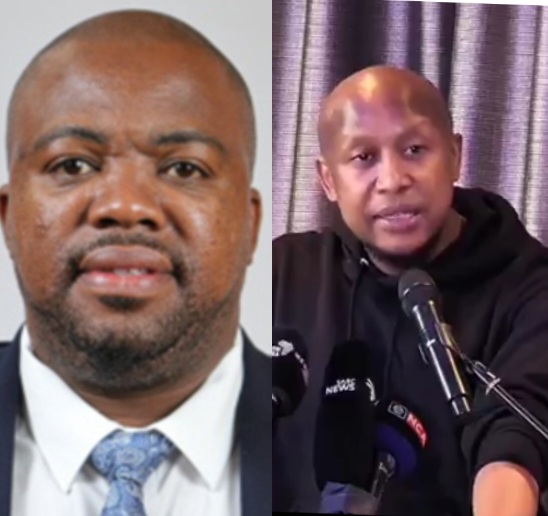
Expelled MK Party member and former spokesperson Nhlamulo Ndhlela has called on the party’s Secretary-General, Sibonelo Nomvalo, to choose between his role in Parliament and his responsibilities as the party’s chief administrator, saying the two positions are incompatible if the party is to function effectively.
Speaking amid ongoing tensions within the MK Party, Ndhlela argued that the demands of serving as a Member of Parliament while simultaneously overseeing the day-to-day operations of a rapidly growing political organisation place an unsustainable burden on one individual.
According to Ndhlela, the position of Secretary-General requires full-time attention, strategic oversight, and constant engagement with party structures across the country. He contends that the responsibilities attached to parliamentary duties make it difficult for any individual to adequately fulfil both obligations at the same time.
“Nomvalo cannot effectively serve as both a Member of Parliament and Secretary-General of the party. He must choose one role,” Ndhlela said.
The remarks add to a growing list of criticisms Ndhlela has directed at the MK Party leadership following his suspension and subsequent expulsion from the organisation. In recent public statements, he has questioned internal disciplinary processes, raised concerns about decision-making structures, and alleged attempts to isolate certain leaders from party president Jacob Zuma.
Ndhlela’s latest comments place renewed focus on governance and organisational accountability within the MK Party, which has experienced rapid political growth since its emergence on South Africa’s political landscape.
The role of Secretary-General is widely regarded as one of the most influential positions within any political party, carrying responsibility for administration, coordination of structures, implementation of leadership decisions, and overall organisational management. Members of Parliament, meanwhile, are expected to dedicate significant time to legislative work, committee responsibilities, constituency engagements, and parliamentary oversight.
Supporters of dual roles in political parties often argue that parliamentary representation strengthens communication between party leadership and lawmakers. Critics, however, maintain that combining such senior responsibilities can lead to divided attention and weaken organisational effectiveness.
The MK Party has not publicly indicated any intention to alter Nomvalo’s current responsibilities. Nor has the party formally responded to Ndhlela’s latest remarks.
The comments come at a time when internal debates over leadership, governance and organisational direction continue to attract public attention, highlighting the challenges facing one of South Africa’s fastest-growing political movements.
As tensions persist, Ndhlela’s call for a separation of party administration and parliamentary duties is likely to fuel further discussion about leadership structures and accountability within the MK Party.