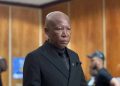
A fresh social media debate has erupted around Economic Freedom Fighters (EFF) leader Julius Malema, with supporters praising his academic background while questioning whether his political opponents have the intellectual preparation to compete with him in public debate.
The conversation began with a provocative post comparing Malema to an unnamed political rival. The writer argued that the individual’s biggest competition was Malema but questioned how anyone could effectively compete with a politician who holds both a Bachelor of Arts degree and an honours degree in philosophy.
The post then took a humorous and personal turn, mocking the unnamed rival’s alleged lack of interest in reading.
“Wena, the only time you read a book was when you were still in Lower Primary school?” the writer joked, adding laughing emojis.
Although the post was clearly framed as political commentary and satire, it quickly became part of a wider conversation about the importance of education, intellectual preparation and political communication in South Africa.
Malema’s academic background has frequently been discussed by his supporters and critics. The EFF leader studied philosophy at the University of South Africa (UNISA), and his academic qualifications have sometimes been highlighted by supporters seeking to portray him as an intellectually capable political leader.
The latest comments appear to suggest that political competition should not be measured only by popularity or public visibility. Instead, the writer argues that a leader’s ability to understand complex issues, formulate arguments and communicate effectively is equally important.
Malema has built a reputation as one of South Africa’s most outspoken political figures. His speeches often focus on economic inequality, land reform, unemployment and the redistribution of wealth. His confrontational political style has earned him a loyal following, particularly among young South Africans, while simultaneously attracting strong criticism from political opponents.
The social media debate also highlights the growing importance of education in political discourse. In an increasingly complex political environment, voters are regularly exposed to debates involving economics, constitutional law, international relations and public policy.
Supporters of Malema argue that his academic background contributes to his ability to engage with complicated political questions and challenge opponents during public debates.
Critics, however, maintain that academic qualifications alone do not determine whether a politician is capable of effective leadership. They argue that practical experience, integrity, governance skills and the ability to deliver tangible improvements in people’s lives are equally important.
The viral post has therefore become more than just a joke at the expense of an unnamed political rival. It has reopened a broader discussion about what South Africans should look for in political leaders.
Should voters prioritise academic qualifications? Should political leaders be judged primarily by their ability to govern? Or should a combination of education, experience and practical results determine who deserves public support?
For now, the debate continues online, with Malema once again at the centre of political conversation.
And as the original poster’s message suggests, when it comes to competing with a politician known for his confidence and debating skills, perhaps the challenge is not only about having a louder voice—but also about being prepared for the argument.