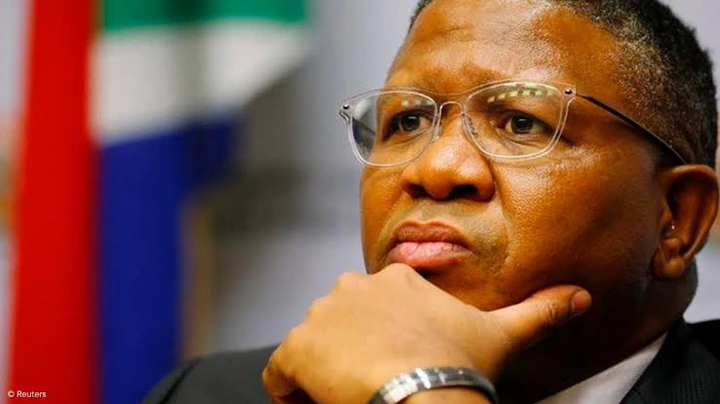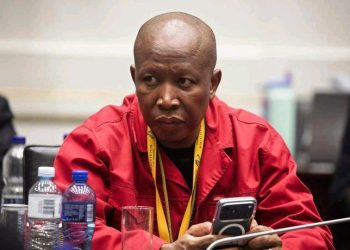

Former Economic Freedom Fighters (EFF) deputy president and current Mbauiye iAfrika President Floyd Shivambu has claimed that his relationship with the leadership of his former party has completely collapsed, saying he no longer has any contact with EFF leaders.
Speaking candidly about his political standing and interactions with former colleagues, Shivambu declared: “I don’t have relations with the leaders of the EFF, all of them anymore—I’ve got zero relationship because some are VERY SCARED to interact with me.”
The remarks mark another chapter in the widening political distance between Shivambu and the party he helped build into one of South Africa’s most influential opposition movements. Once regarded as a central strategist and key public face of the EFF alongside party leader Julius Malema, Shivambu’s departure and subsequent political activities have reshaped alliances and sparked intense debate across the country’s political landscape.
While Shivambu did not elaborate on which specific leaders he was referring to, his comments suggest a deepening rift that extends beyond ordinary political disagreements. By alleging that some EFF figures are afraid to engage with him, he hinted at underlying tensions that continue to define relations between himself and his former political home.
Political observers note that the fallout comes at a time when South Africa’s opposition politics are undergoing significant realignment. As newer formations and political movements seek to establish themselves, former allies increasingly find themselves competing for influence, supporters and public attention.
“I don’t have relations with the leaders of the EFF, all of them—I’ve got zero relationship because some are VERY SCARED to interact with me…” 🙆🏻♀
— Floyd Shivambu. pic.twitter.com/wwIHxbvGRi
— YaseBlock B 🇸🇿 (@ThisIsColbert) June 21, 2026
Shivambu has positioned Mbauiye iAfrika as a vehicle for a new political direction, seeking to attract citizens who feel disillusioned with traditional political structures. His criticism of former associates has frequently drawn headlines, adding to speculation about whether any future cooperation between him and the EFF remains possible.
For the EFF, the comments are likely to fuel further discussion about internal unity and the party’s relationship with former leaders who have since charted independent political paths. The party has not publicly responded to Shivambu’s latest remarks.
Despite the growing distance, Shivambu remains one of the most recognisable figures to emerge from the EFF’s leadership ranks. His latest statement underscores the extent of the separation, portraying a political relationship that has moved from close collaboration to complete estrangement.
Whether the divide is permanent or merely another phase in South Africa’s dynamic political environment remains to be seen. For now, Shivambu’s message is unequivocal: communication between himself and the EFF leadership has all but ceased.