

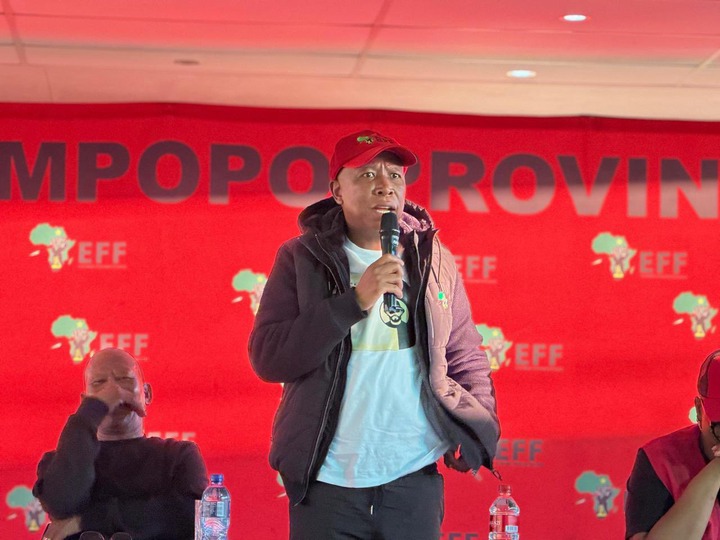
Economic Freedom Fighters leader Julius Malema is once again at the center of political and legal controversy after Parliament revisited questions surrounding his alleged failure to comply with a court order issued five years ago requiring him to apologise for defamatory remarks made against a judge.
The matter resurfaced during recent parliamentary discussions, where concerns were raised about whether Malema has fully complied with a judicial ruling that instructed him to publicly apologise and retract comments found to be damaging to the reputation and integrity of a member of the judiciary.
The court order originated from a legal dispute in which the judiciary determined that statements made by Malema about a judge were defamatory. As part of the judgment, the EFF leader was directed to issue a formal apology and withdraw the remarks. However, despite the passage of five years, the issue remains unresolved in the eyes of critics, prompting renewed calls for accountability.
The development has sparked debate within Parliament about the responsibilities of elected representatives and the importance of respecting judicial decisions. Several lawmakers argued that Members of Parliament have a duty to uphold the Constitution and demonstrate respect for the rule of law, regardless of their personal views on court judgments.
Opposition parties have been particularly vocal, contending that failure to comply with a court order sends a troubling message about accountability among public officials. According to these critics, public confidence in South Africa’s democratic institutions depends on all citizens—especially political leaders—adhering to legal obligations imposed by the courts.
Some parliamentary members have suggested that the matter be referred to Parliament’s ethics structures for consideration. They argue that continued non-compliance with a court order could raise ethical concerns regarding the conduct expected of lawmakers. Others, however, maintain that enforcement of court judgments remains primarily the responsibility of the judiciary and should be addressed through legal channels rather than parliamentary intervention.
The controversy has also reignited discussion about the relationship between political leaders and the courts. While Malema and the Economic Freedom Fighters have consistently stated their commitment to the Constitution and democratic institutions, the party has frequently criticised certain judicial decisions, arguing that political leaders should retain the right to challenge rulings they disagree with.
Legal analysts note that court orders remain legally binding unless they are overturned, amended, or set aside by a competent court. Failure to comply with such orders may expose individuals to further legal action, including potential contempt of court proceedings, depending on the circumstances and the court’s assessment of compliance.
The renewed attention on the matter comes at a time when questions of accountability, transparency, and adherence to constitutional principles continue to dominate South Africa’s political discourse. Observers say the outcome of Parliament’s deliberations could set an important precedent regarding how elected officials are expected to respond to judicial rulings.
As discussions continue, attention is expected to focus on whether Parliament will take additional steps to address the issue and whether the courts may become involved again should concerns about compliance persist. The debate is also likely to fuel broader conversations about the balance between political expression, judicial authority, and the responsibilities that come with holding public office.
With both supporters and critics closely watching developments, the controversy is expected to remain a significant topic in South Africa’s political landscape in the weeks ahead.


