

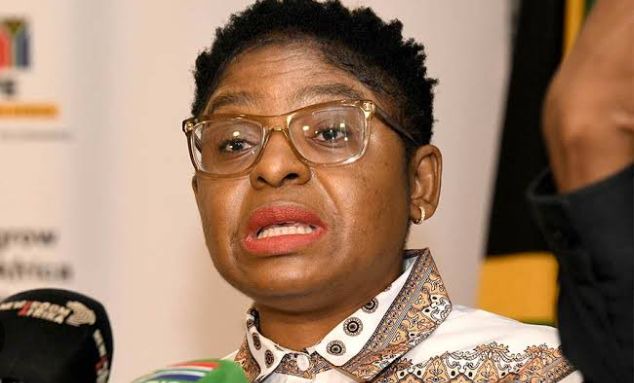
South Africa’s Minister in the Presidency, Khumbudzo Ntshavheni, has stated that no government can directly create employment, emphasizing that the state’s primary responsibility is to create an environment that enables economic growth and job creation.
Speaking on the country’s economic challenges and employment prospects, Ntshavheni said the government’s focus is on developing policies and conditions that encourage investment, business expansion, and sustainable economic development.
“There is no government that’s going to create employment,” Ntshavheni said. “The role of government is to create opportunities for economic development and growth.”
Her remarks come at a time when South Africa continues to grapple with high unemployment levels, particularly among young people. The issue remains one of the country’s most pressing socio-economic challenges, with millions of citizens seeking stable employment opportunities.
[WATCH] “There is no government that’s going to create employment.” Minister in the Presidency Khumbuzo Ntshavheni says the government will create opportunities for economic development and growth. #YouthMonth2026 #YouthDay #June16th pic.twitter.com/Cym5IE6qVp
— Newzroom Afrika (@Newzroom405) June 16, 2026
Ntshavheni explained that while government can support job creation through infrastructure projects, public programmes, and policy reforms, long-term employment growth is largely driven by the private sector and a thriving economy. She noted that attracting investment and supporting businesses are essential steps toward creating jobs on a meaningful scale.
According to the minister, government initiatives are aimed at improving the business environment, expanding economic activity, and ensuring that entrepreneurs and investors have the confidence to grow their operations within the country. These efforts, she said, are expected to generate employment opportunities across various sectors.
Her comments have sparked discussion among South Africans, with some agreeing that sustainable employment is largely dependent on economic growth, while others argue that government must play a more direct role in addressing unemployment through targeted interventions and public sector opportunities.
Economic analysts have long maintained that governments can facilitate job creation by implementing favourable policies, investing in infrastructure, improving education and skills development, and maintaining a stable economic environment. However, most employment opportunities are ultimately created by businesses responding to market demand and growth opportunities.
Ntshavheni reiterated that the government remains committed to supporting economic expansion and fostering conditions that will enable businesses to thrive. She stressed that economic growth remains a critical component of South Africa’s efforts to reduce unemployment and improve living standards.
As the country seeks solutions to its unemployment crisis, the debate over the balance between government intervention and private-sector-led job creation is expected to remain a central issue in South Africa’s economic and political discourse.


