

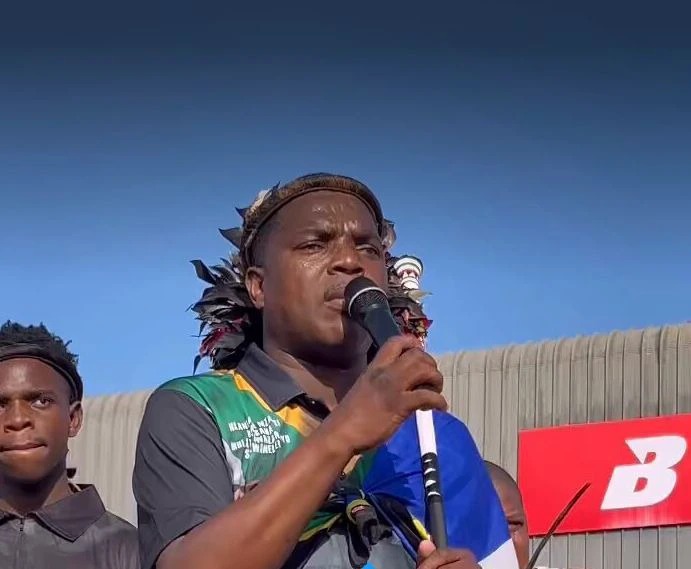
A growing dispute has emerged among some of the most prominent figures associated with South Africa’s anti-illegal immigration campaigns, with Ngizwe Mchunu publicly criticising Jacinta Ngobese-Zuma and Phakelumthakathi over their political affiliations and the direction of future protest action.
The disagreement comes amid increased public attention on the March and March movement, which has organised demonstrations calling for stronger action against illegal immigration and undocumented foreign nationals. In recent weeks, questions have been raised about whether the movement is politically aligned with certain parties ahead of local government elections.
Mchunu, a controversial media personality and activist who has become one of the most recognisable faces of anti-illegal immigration protests, has reportedly expressed concern about the involvement of individuals linked to political organisations. His criticism appears to be aimed at ensuring that protest actions remain independent and are not seen as platforms for political campaigning.
The latest tensions centre on Jacinta Ngobese-Zuma, a prominent figure in the movement who is also a member of Parliament for the MK Party. Speculation about political ambitions and possible links between protest campaigns and party politics has circulated for several months. Ngobese-Zuma recently rejected claims that the March and March movement intends contesting elections as a political party and denied suggestions that it was being used to build political support.
Mchunu has reportedly questioned whether leaders with direct political affiliations can genuinely claim that protest movements are independent of party politics. While no formal split has been announced, the disagreement highlights growing divisions over the future direction of the campaign and who should lead it.
The dispute also involves Phakelumthakathi, another prominent activist associated with anti-illegal immigration demonstrations. Reports indicate that Mchunu disagrees with calls for a planned march scheduled for 30 June and has objected to the involvement of political parties in such actions. According to accounts linked to recent protests, Mchunu has argued that demonstrations should be driven by ordinary citizens rather than political organisations seeking influence.
Adding to the tensions, Mchunu has reportedly criticised what he describes as business or corporate ties involving activists within the movement. However, publicly available reporting has not provided independently verified details about the specific companies or commercial relationships referred to by Mchunu. As a result, those allegations remain unconfirmed and should be treated with caution.
The disagreement emerges against a backdrop of increasing scrutiny surrounding anti-illegal immigration protests across South Africa. Several demonstrations led by activists including Mchunu, Ngobese-Zuma and Phakelumthakathi have attracted national attention and sparked debate about immigration policy, public safety and social cohesion.
Political tensions between Mchunu and Ngobese-Zuma are not new. Earlier this year, Ngobese-Zuma publicly urged Mchunu to “watch his mouth” when discussing sensitive political matters, warning that inflammatory language could undermine important messages and create unnecessary controversy.
Observers say the latest clash reflects broader challenges facing grassroots movements that attract support from individuals with different political loyalties. While some activists insist that anti-illegal immigration campaigns should remain independent of party politics, others argue that political engagement is necessary to influence government policy and legislation.
The MK Party has previously sought to distance itself from accusations of tribalism while also supporting stronger measures on immigration and local economic participation. At the same time, movement leaders have repeatedly denied that protest actions are being used as election platforms.
For now, it remains unclear whether the dispute will affect planned demonstrations or lead to a formal break between key figures involved in the movement. What is clear is that disagreements over political affiliations, leadership and strategy are becoming increasingly visible as anti-illegal immigration activism continues to grow in prominence across South Africa. As debates intensify ahead of future protests, questions over who speaks for the movement — and whether political parties should play a role in it — are likely to remain at the centre of the discussion.


