

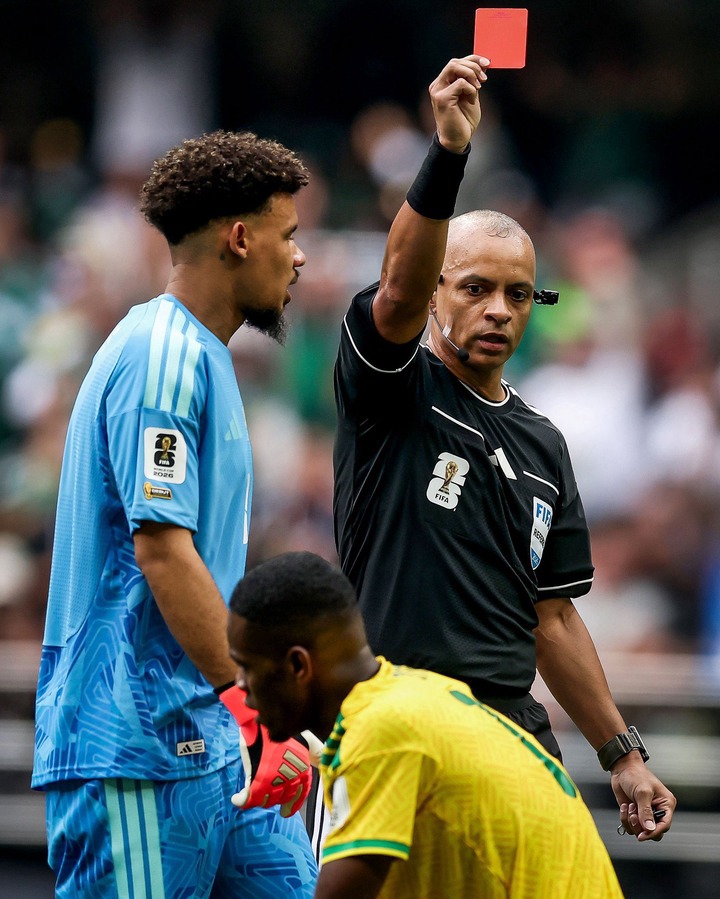
Brazilian referee Wilton Pereira Sampaio has come under global scrutiny after new statistics showed he has shown 12 red cards in 31 matches since September 2025, marking one of the highest dismissal rates in recent elite football.
The figures have triggered discussion among analysts, fans, and officiating experts, who are divided on what the trend represents whether it reflects firm match control, stricter modern refereeing standards, or simply a run of particularly heated fixtures.
Sampaio, a FIFA-listed official and one of South America’s most experienced referees, has overseen numerous high-profile domestic and international games, including major CONMEBOL and FIFA competitions. He is widely known for his firm approach and willingness to enforce disciplinary rules decisively.
However, the recent statistic averaging nearly one red card every 2.5 matches has led to renewed examination of his officiating style, as this rate is considered unusually high at the top level of the sport.
Refereeing analysts note that several modern developments may contribute to such numbers, including VAR intervention, stricter interpretations of violent conduct rules, and increased focus on player safety, all of which have led to more dismissals in today’s game compared to previous years.
The nature of the matches he has been assigned to may also be a factor, with high-intensity fixtures in South American competitions often producing more physical and emotionally charged encounters.
Despite the debate, Sampaio remains a respected figure in officiating circles, with FIFA continuing to trust him for major assignments. His consistency and control of fast-paced matches are frequently highlighted as key strengths.
Football authorities have not raised any official concerns about his record, and there is no suggestion that his future appointments are at risk. Instead, the data is being viewed as part of a wider discussion on how refereeing trends are evolving in modern football.
Some former officials defend his record, arguing that disciplinary actions reflect player behaviour rather than referee bias, while others say referees must carefully balance strict enforcement with maintaining the flow of the game.
As the 2026 season progresses, attention is likely to remain on Sampaio’s officiating decisions, particularly in high-pressure matches.


