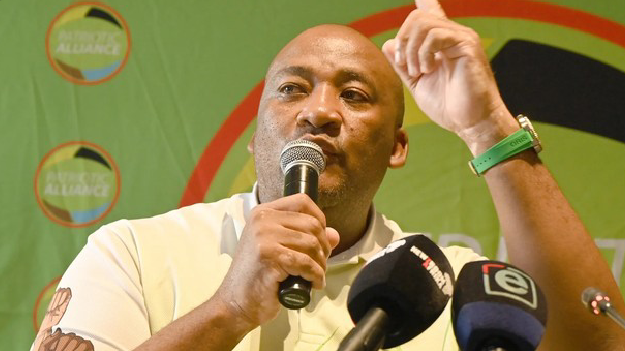

The March and March Movement has issued a strong ultimatum to the national government, demanding urgent action on the issue of undocumented immigrants in the country. The movement says government has until the end of June 2026 to implement concrete measures addressing what it describes as a growing national crisis.
According to the group, the continued presence of undocumented foreign nationals is placing increasing strain on public resources, contributing to unemployment concerns, and fuelling rising frustration within several communities. The movement argues that existing immigration enforcement systems have not been effectively implemented, leading to widespread public dissatisfaction and a sense of government inaction.
The ultimatum forms part of a broader campaign by the movement, which has been vocal in recent months about border control, documentation verification processes, and enforcement of labour regulations. It maintains that stronger action is needed to ensure that only individuals with legal status are able to access employment opportunities and public services.
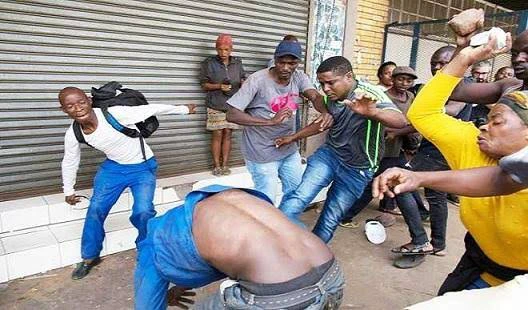
The group’s leadership has stated that failure by government to respond decisively before the end of June could result in intensified public demonstrations and increased mobilisation across various parts of the country. While the movement has not explicitly endorsed violence, it has warned that frustration among citizens is reaching a critical point.
Government has not yet issued a detailed public response to the ultimatum, but immigration policy and border management remain highly sensitive topics in national discourse. Authorities have previously emphasized that immigration enforcement must be conducted within the framework of the law and in accordance with constitutional protections, while also balancing humanitarian obligations.
The issue of undocumented migration continues to generate heated debate in South Africa, with differing views on its impact on employment, service delivery, and public safety. Some communities have called for stricter enforcement and faster deportation processes, while others caution against scapegoating foreign nationals for broader socio-economic challenges such as unemployment and inequality.
Analysts note that the growing pressure from civic movements reflects deeper structural frustrations within society, particularly around job scarcity and economic inequality. They argue that without long-term economic solutions, tensions surrounding immigration are likely to persist.
As the end-of-June deadline approaches, attention is now turning to how government will respond to the demands and whether dialogue or policy adjustments will be pursued to prevent further escalation. The situation highlights the delicate balance between enforcing immigration laws, maintaining social cohesion, and addressing legitimate public concerns in a rapidly changing socio-political environment.