

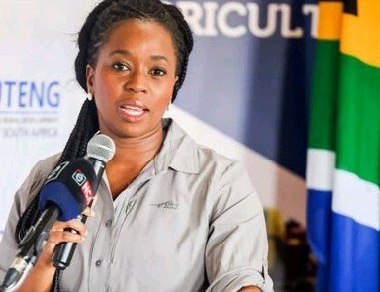
A recent occurrence that has the potential to enthral South Africa’s provincial political scene is the appointment of Vuyiswa Ramokgopa to the position of Acting Premier of Gauteng. This appointment was made by Panyaza Lesufi.
Ramokgopa, a prominent figure within RISE Mzansi and the Member of the Executive Council for Agriculture, Rural Development, and Economic Development for Gauteng, will temporarily take over as leader while Lesufi is away on official business. Numerous individuals believe that the nomination is an additional sign of the new coalition-style administration that will be established in Gauteng following the elections that will take place in 2024.
Because Lesufi has relied on non-ANC parties to assist in stabilising administration and ensuring that things continue to function smoothly, this action demonstrates how smaller parties are becoming more prominent in the leadership of the province.
RISE Mzansi, a new political formation that has been gradually extending its influence in Gauteng politics ever since it joined government structures, has reached a significant milestone with Ramokgopa’s ascension to the position of Acting Premier. Lesufi’s aim to strengthen her involvement in executive leadership and establish deeper relationships inside the provincial administration is assumed to be reflected in the appointment, according to political watchers who have speculated about the significance of the decision.
Ramokgopa, who is only 38 years old, is one of the youngest senior officials to hold the post in the executive hierarchy of Gauteng. Because she was appointed to Lesufi’s cabinet in 2024, she was brought to public attention for the first time. Since then, she has established a reputation for herself by advocating for causes such as economic inclusion, rural development, and food security.
For the purpose of ensuring that there is continuity in leadership within the province, the nomination has been justified by the office of the Premier of Gauteng as a conventional governance procedure. The opposition parties will be keeping a tight eye on the political repercussions of the action, particularly due to the fact that coalition dynamics are still in the process of reshaping the power structures in the provinces of South Africa.
Despite the fact that Lesufi has persistently maintained his paradigm since 2022, some who are opposed to the multi-party governance model that Lesufi has implemented in Gauteng have stated that the province is still struggling with political fragmentation.
RISE Mzansi is hoping that the hiring of Ramokgopa will increase the party’s profile in the run-up to future elections. This is in light of the fact that coalition politics are becoming increasingly influential in Gauteng.
Smaller parties are being granted more executive power at the highest levels of government, rather than simply sitting in opposition, as a result of this nomination, which also predicts a bigger transformation in the politics of the province.


