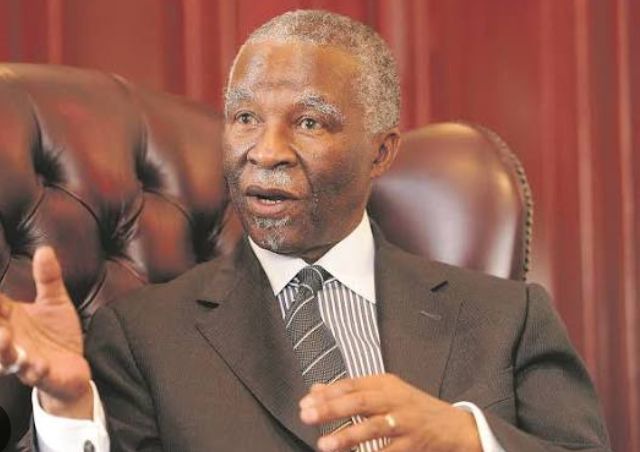
Former South African president Thabo Mbeki has sparked renewed political debate after blaming former president Jacob Zuma and current President Cyril Ramaphosa for the country’s rising crime and unemployment levels, while rejecting claims that illegal immigrants are responsible for South Africa’s socio-economic challenges.
Speaking during a recent engagement on governance and national issues, Mbeki said the country’s leadership failures over the years have contributed more to economic decline and crime than undocumented migration.
“Jacob Zuma and Cyril Ramaphosa caused high levels of crime and unemployment, not illegal immigrants. I was the head of state here, there were undocumented immigrants and the economy was growing, crime levels were down,” Mbeki stated.
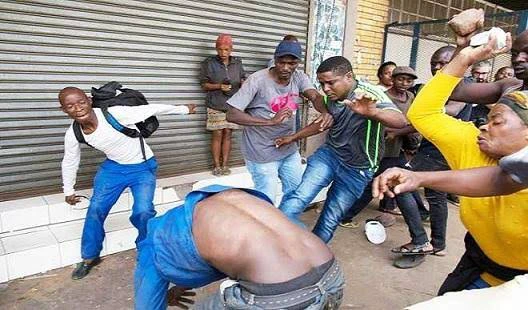
The remarks come amid growing anti-illegal immigration protests in several South African communities, where some residents have accused undocumented foreign nationals of taking jobs, contributing to crime and putting pressure on public resources.
Mbeki dismissed those claims, arguing that South Africa’s problems stem from poor governance, corruption and policy failures rather than the presence of undocumented immigrants. He pointed to the economic growth experienced during his presidency between 1999 and 2008 as evidence that immigration alone does not determine a country’s economic or crime situation.
During Mbeki’s administration, South Africa recorded stronger economic performance, increased investor confidence and lower unemployment levels compared to recent years. Although undocumented immigration existed at the time, Mbeki argued that effective governance and stable institutions helped maintain economic progress and social order.
Political analysts believe the comments are likely to intensify discussions within the African National Congress, which continues to face criticism over unemployment, crime, corruption and declining public trust.
South Africa currently struggles with high unemployment, particularly among young people, while violent crime remains a major concern across many communities. The immigration debate has also become increasingly sensitive ahead of future political campaigns and policy discussions.
Mbeki’s comments have drawn mixed reactions on social media and within political circles. Supporters praised him for addressing what they view as the real causes of the country’s difficulties, while critics accused him of unfairly targeting current and former leaders.
As debates around immigration and governance continue, Mbeki’s intervention is expected to fuel further national discussion on accountability, economic reform and the future direction of South Africa’s leadership.