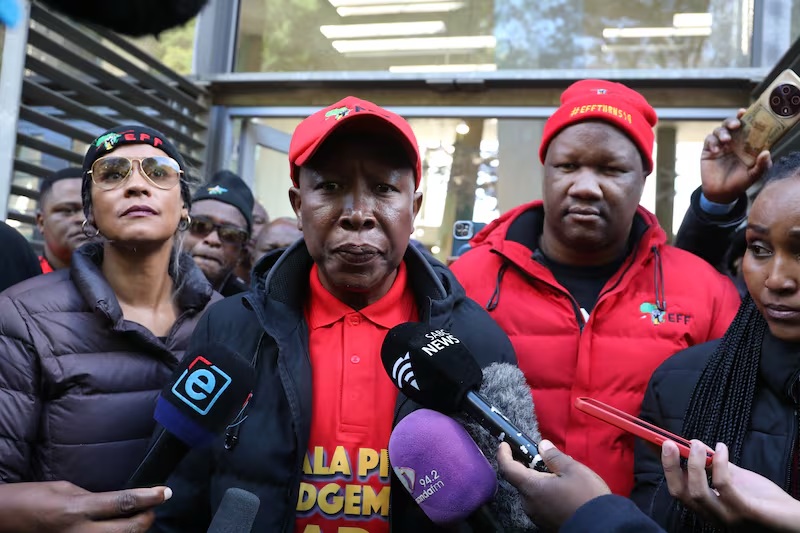
A legal challenge has reportedly been filed in the Western Cape High Court seeking to block Julius Malema, leader of the Economic Freedom Fighters, from participating in the Judicial Service Commission.
According to reports, the application was brought by a foundation arguing that Malema’s continued presence in the commission could undermine the impartiality and integrity expected from the constitutional body responsible for recommending judicial appointments in South Africa.
The challenge reportedly centres on concerns about Malema’s public statements and political conduct, with the applicants claiming these raise questions about his suitability to serve on a body tasked with protecting judicial independence. The case is expected to test constitutional and legal principles surrounding the composition of the Judicial Service Commission and the role political figures may play within it.
Malema, known for his outspoken political style and strong criticism of various institutions, has not yet publicly responded to the reported court application. The EFF has also not issued an official statement on the matter.
The Judicial Service Commission is one of South Africa’s most influential constitutional structures. Established under the Constitution, the commission includes representatives from the judiciary, Parliament, the legal profession and the executive branch. Its responsibilities include interviewing candidates for judicial office and recommending appointments to the bench.
Legal analysts believe the case could have broader implications for the relationship between politics and the judiciary in South Africa. If the court proceeds with the matter, it may set an important precedent regarding the qualifications, conduct and eligibility of politicians serving on constitutional oversight bodies.
The development is expected to attract significant public and political attention as debates continue over judicial independence, constitutional accountability and the balance between political representation and impartial governance within South Africa’s democratic institutions.