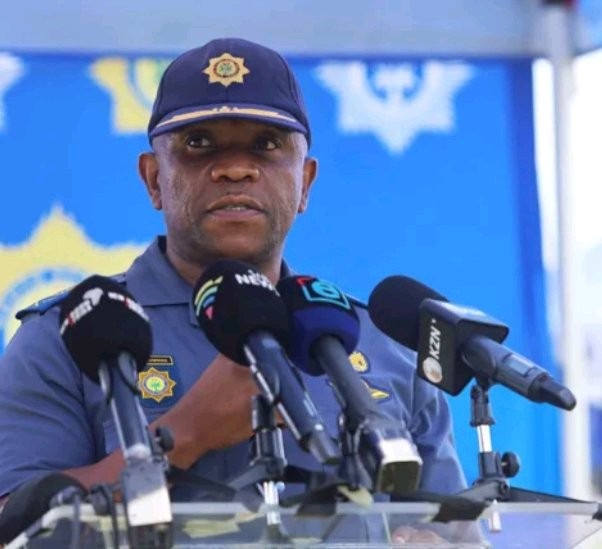
Senior police official Nhlanhla Mkhwanazi recently brought a stark reality to the forefront of South Africa’s national conversation, warning that the country’s law enforcement agencies are battling far more than just individual street-level criminals. According to Mkhwanazi, the true challenge lies in a deep-seated infiltration of organized crime syndicates within the nation’s political and governmental structures.
In his assessment of the current state of governance and crime, Mkhwanazi explained that these criminal networks have successfully forged alliances with certain political figures. This strategic cooperation grants them significant influence within state institutions, effectively allowing a shadow system to operate alongside formal government structures. By using this political leverage, these groups can manipulate public systems, access state resources, and avoid the scrutiny of law enforcement. Mkhwanazi noted that the situation has reached a point where it is difficult to distinguish where legitimate administration ends and criminal interference begins, creating an environment that actively protects those behind the corruption.
This sophisticated level of operation means that standard police tactics are no longer adequate. Because these syndicates have embedded themselves into the very machinery of the state, they are often shielded from accountability. His comments reflect long-standing concerns voiced by security analysts, who have observed criminal groups gaining a dangerous foothold in areas such as public procurement, major infrastructure projects, and local government management.
The revelation has added fuel to the ongoing debate regarding the health of South Africa’s public institutions and the urgent need for reform. While political leaders have frequently promised to root out corruption and rebuild public trust, civil society organizations argue that these pledges must be matched with concrete action, such as increased transparency and rigorous oversight. Mkhwanazi’s direct remarks are likely to increase the pressure on authorities to investigate these links more aggressively. As law enforcement continues the difficult task of dismantling these illicit networks, the spotlight remains firmly fixed on the complex and often murky relationship between political power and organized crime in the country.