

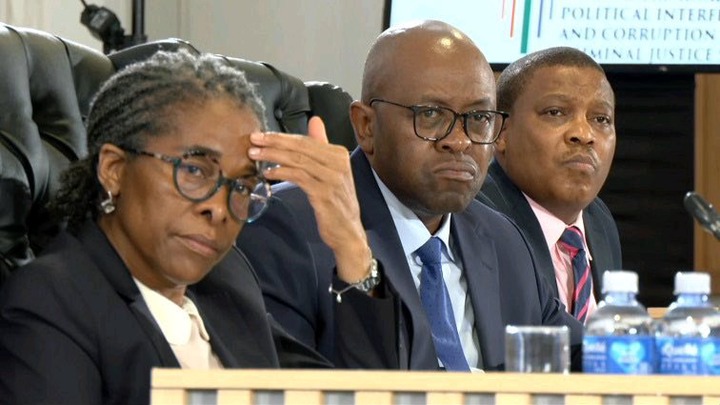
There were no checks and balances in place, no oversight committees, and elected officials in Ekurhuleni and Tshwane supposedly did nothing to stop the flow of illicit deals, public monies, and ghost procurement.
Simply put, South Africans want to know: who was responsible for stopping this?
Ekurhuleni and Tshwane are at the heart of the Madlanga Commission’s inquiry into alleged widespread corruption inside South African municipalities.
According to the testimony that has been heard thus far, there are questionable procurement transactions, suspicious contracts, and the wilful violation of supply chain procedures that are intended to safeguard public funds.
[COMMENT]
What’s coming out of the Madlanga Commission should be a wake-up call, not just for Ekurhuleni and Tshwane, but for how local government is functioning more broadly.
The pattern isn’t random misconduct-it points to systemic governance failure.
When irregular… pic.twitter.com/61nXOMAIHG
— Yusuf Abramjee (@Abramjee) April 25, 2026
According to reports, no significant outcome was triggered by the various levels of municipal monitoring, including internal audit units, public accounting committees, and external auditors.
Emerging information from the Commission suggests that internal auditors did, in fact, raise red lights, but that their concerns apparently were ignored.
Year after year, the same issues were highlighted in the external audit reports, but the people in charge did very little to address them.
So far, there have been no proven large-scale criminal charges, and disciplinary actions against officials who were involved are supposedly still outstanding.
This is a pattern of failure. According to experts, the Madlanga Commission’s findings reveal systemic corruption in various South African cities.
According to sources, Johannesburg will be the next city to be scrutinised, and they also claim that it will not appear different.
Every community that lost out on infrastructure, housing, or healthcare due to a stolen contract is another community that never got the services it paid for.
Those supposedly responsible have stayed in their positions, shielded by political networks, while residents of Ekurhuleni and Tshwane have endured years of disintegrating delivery.
It was supposedly out of fear, rather than allegiance, that whistleblowers who knew the truth chose to remain silent.
As of yet, investigators have not determined the extent of the alleged looting or the identities of the political figures who may have provided cover for it.
Unresolved concerns include who is responsible, whether contractors involved should be blacklisted, and whether criminal referrals should be considered.
The findings of the Commission run the risk of becoming yet another report that fails to make any changes unless consequence management is implemented at a faster rate than corruption.
The money you pay in rates, taxes, and levies supposedly goes here. Do you still think that anyone in your municipality is serving you, or are they serving themselves, whether you happen to reside in Ekurhuleni, Tshwane, or Johannesburg? Leave your region in the space provided.


