

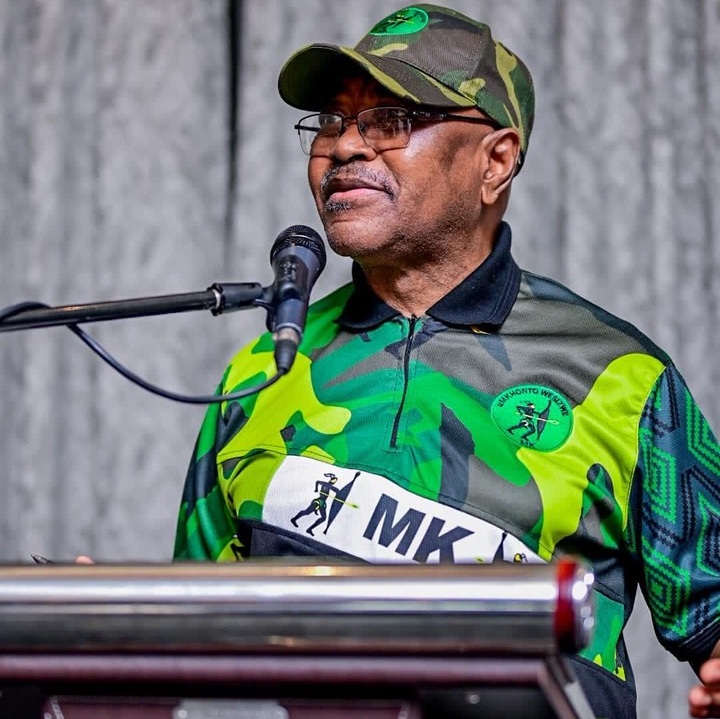
Former president Jacob Zuma has moved to restructure leadership within the uMkhonto weSizwe Party (MKP) in KwaZulu-Natal, removing veteran politician Willies Mchunu from his position as the party’s provincial leader.
The decision, which has sparked widespread reaction within political circles, was reportedly communicated through rising party figure Sibonelo Nomvalo, signaling a generational shift within the MKP’s provincial structures.
Mchunu, a seasoned political figure with deep roots in KwaZulu-Natal politics, had been seen as a stabilizing presence within the party. His removal, however, points to a broader strategy by Zuma to reconfigure leadership and inject new energy into the organization as it seeks to consolidate its influence ahead of upcoming electoral contests.
Sources close to the party suggest that internal disagreements over strategy, performance, and organizational direction may have contributed to the decision. While the MKP has not released a detailed public explanation, insiders indicate that Zuma is increasingly focused on streamlining leadership and strengthening grassroots mobilization in key provinces.
The involvement of Nomvalo in communicating the decision has also drawn attention, with analysts interpreting it as a sign that younger leaders are being elevated within the party’s ranks. This shift could signal an attempt to broaden the MKP’s appeal among younger voters while maintaining its established support base.
Political analysts say the move underscores Zuma’s continued hands-on leadership style within the MKP, as he seeks to shape the party’s trajectory in a highly competitive political landscape.
“This is a clear indication that Zuma is not afraid to make bold and, at times, controversial decisions to assert control and reposition the party,” said political analyst Thami Ngcobo.
The reshuffle comes at a critical time for the MKP, as it works to expand its footprint in KwaZulu-Natal — a province widely regarded as a key battleground in South African politics.
Mchunu has yet to publicly respond to his removal, and it remains unclear whether he will continue to play any role within the party moving forward. Meanwhile, attention now shifts to how the new leadership structure will impact the MKP’s performance and internal cohesion in the months ahead.
As the political landscape continues to evolve, Zuma’s latest move is likely to fuel further debate about leadership stability, generational change, and the future direction of the MK Party.


