

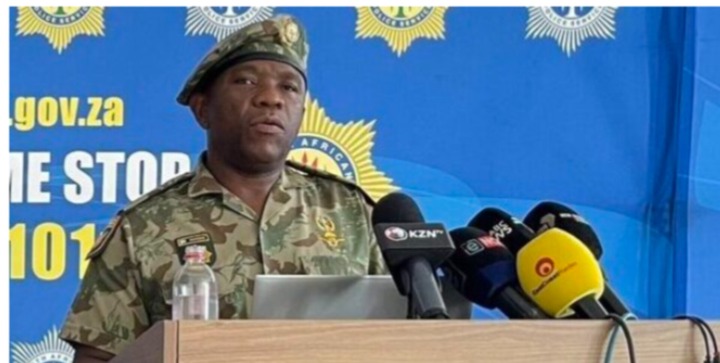
Nhlanhla Mkhwanazi, the KwaZulu-Natal provincial police commissioner, has pushed back against plans by President Cyril Ramaphosa to deploy the army to assist in fighting crime in parts of the country.
Speaking during a high-visibility crackdown operation in Durban on Friday, Lt-Gen Mkhwanazi addressed officers under his command, urging them to take full responsibility for maintaining law and order in their communities. He said the police service must demonstrate its capability and authority without relying on military intervention.
“I worried yesterday when the president said he’s deploying the army, and I said, ‘oh yes, that means the men and women that I’m leading will not be competent if they are saying the army comes in’,” Mkhwanazi told officers. He encouraged members of the South African Police Service (SAPS) to intensify their efforts and ensure communities feel the presence and impact of dedicated policing.
In his State of the Nation Address on Thursday, President Ramaphosa announced that members of the South African National Defence Force would be deployed to parts of Gauteng and the Western Cape. The move is aimed at supporting police operations targeting gang violence, illegal mining, and other forms of organised crime that have destabilised several communities.
The announcement has sparked mixed reactions across the country. Policing expert Jeremy Vearey told the South African Broadcasting Corporation that while SANDF deployments to gang-affected areas have been attempted before, their results have often been temporary and not sustainable in the long term.
Mkhwanazi also raised concerns about the growing influence of private security companies in the crime-fighting space. He warned that police officers must work diligently to prevent a situation where private firms dominate functions traditionally reserved for law enforcement. “We must do so much that the security companies must not take away our jobs,” he said.
His remarks highlight ongoing debates about the most effective strategies to combat violent crime in South Africa, with questions lingering over whether military support strengthens or undermines conventional policing efforts.


