

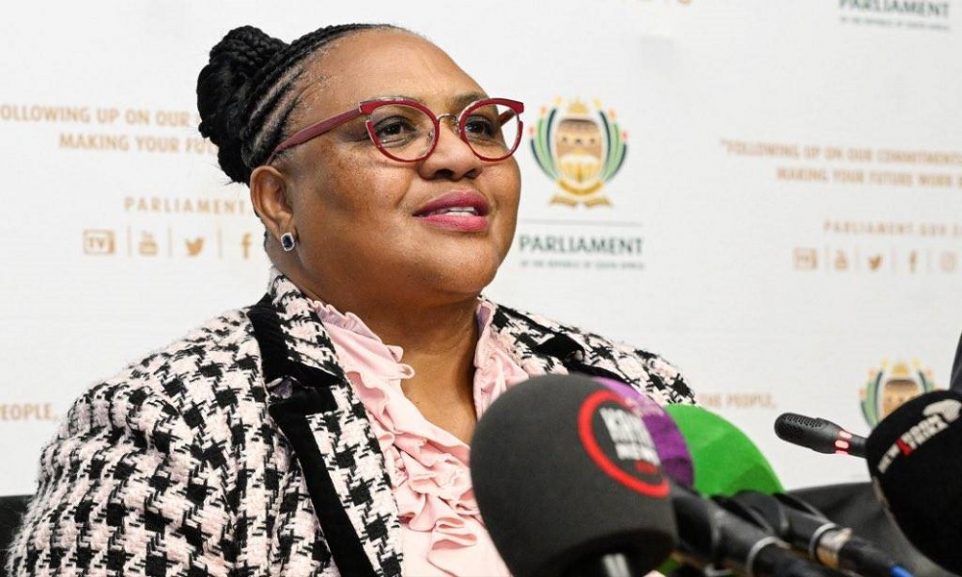
National Assembly Speaker Thoko Didiza has signalled her intent to address the fallout sparked by KwaZulu-Natal Police Commissioner Lieutenant-General Nhlanhla Mkhwanazi’s recent allegations, which have raised serious questions about the conduct and influence of certain political figures in policing matters.
Speaking through her office late on Tuesday, Didiza confirmed that she is weighing “all appropriate steps” in response to Mkhwanazi’s comments, which surfaced during a tense media briefing last week. While she stopped short of detailing what actions she may take, insiders close to Parliament’s presiding officers say a formal inquiry or a summons to appear before a parliamentary committee are among the options on the table.
Mkhwanazi stunned the public when he suggested that unnamed politicians had attempted to interfere in operational policing matters in KwaZulu-Natal. Although he did not name individuals, his remarks have triggered a political storm, particularly within the ruling party’s provincial structures, where some leaders have privately described the commissioner’s allegations as reckless and damaging to the already fragile trust between law enforcement and communities.
In her statement, Didiza noted that allegations of political meddling in policing strike at the heart of constitutional governance. “Any suggestion that the independence of the South African Police Service is being undermined for political gain must be treated with the utmost seriousness. Parliament has a duty to protect the integrity of state institutions and ensure accountability,” she said.
Opposition parties have already seized on the controversy, demanding that Mkhwanazi be granted an urgent opportunity to present evidence before Parliament. The Democratic Alliance’s shadow minister for police, Andrew Whitfield, said his party would push for a full-scale parliamentary investigation, warning that if left unchecked, political interference could cripple the police’s ability to tackle crime.
Meanwhile, Police Minister Bheki Cele has remained tight-lipped, declining to comment when approached by reporters outside a recent security cluster meeting. Sources close to Cele say he is seeking legal advice on how best to respond without worsening tensions within the provincial command.
As the political temperature rises, all eyes will be on Didiza’s next move, which could set a precedent for how Parliament deals with allegations that pit powerful political interests against the independence of law enforcement.


