

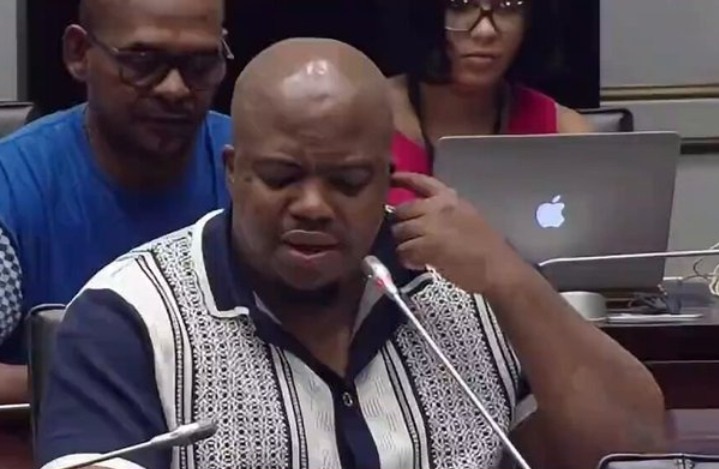
A parliamentary inquiry erupted into high drama this week when MK Party MP Sibonelo Nomvalo subjected witness Tiyani Hlungwani to an intense line of questioning demanding that he disclose the origin of allegations that KwaZulu-Natal police boss General Nhlanhla Mkhwanazi and National Police Commissioner Fannie Masemola had accepted a R100 000 bribe.
The confrontation unfolded before stunned lawmakers and observers as Nomvalo pressed Hlungwani to identify who supplied him with the information behind the incendiary claims allegations that have sent shockwaves through South Africa’s law-enforcement and political corridors.
Raising his voice at times and repeatedly returning to the same point Nomvalo insisted that the witness clarify whether the accusations were based on direct knowledge, documentary evidence or hearsay. He warned that unsubstantiated claims involving senior police officials could inflict severe reputational damage and undermine public trust in institutions already under intense scrutiny.
Where did this information come from? Nomvalo asked according to those present in the hearing room. You cannot make allegations of this magnitude without explaining the source.
Hlungwani visibly uncomfortable, reportedly told the committee that he was not at liberty to disclose certain details, citing concerns for personal safety and the protection of individuals he described as whistle-blowers. His reluctance drew murmurs from MPs across party lines, some of whom urged him to cooperate fully with the inquiry, while others cautioned that witnesses must not be intimidated during parliamentary proceedings.
The explosive exchange comes amid heightened national debate about corruption within the criminal-justice system and the integrity of senior leadership structures in the South African Police Service. Both General Mkhwanazi and Commissioner Masemola have previously denied wrongdoing in unrelated matters and no formal findings have yet been made regarding the specific R100 000 allegation raised during the hearing.
Committee chairpersons intervened to restore order as the questioning grew increasingly heated, reminding participants that the purpose of the inquiry was to establish facts rather than stage political confrontations. Legal advisers to Parliament were also seen conferring quietly at the back of the chamber as the session continued.
Political analysts say the episode underscores the combustible atmosphere surrounding corruption probes and the growing willingness of MPs to aggressively test witness testimony in public forums. With further hearings scheduled the committee is expected to summon additional witnesses and demand documentary evidence to corroborate or disprove the claims.
For now the bribe allegations remain unproven but the spectacle of a tense interrogation has ensured that the inquiry has become one of the most closely watched parliamentary battles of the year.


