

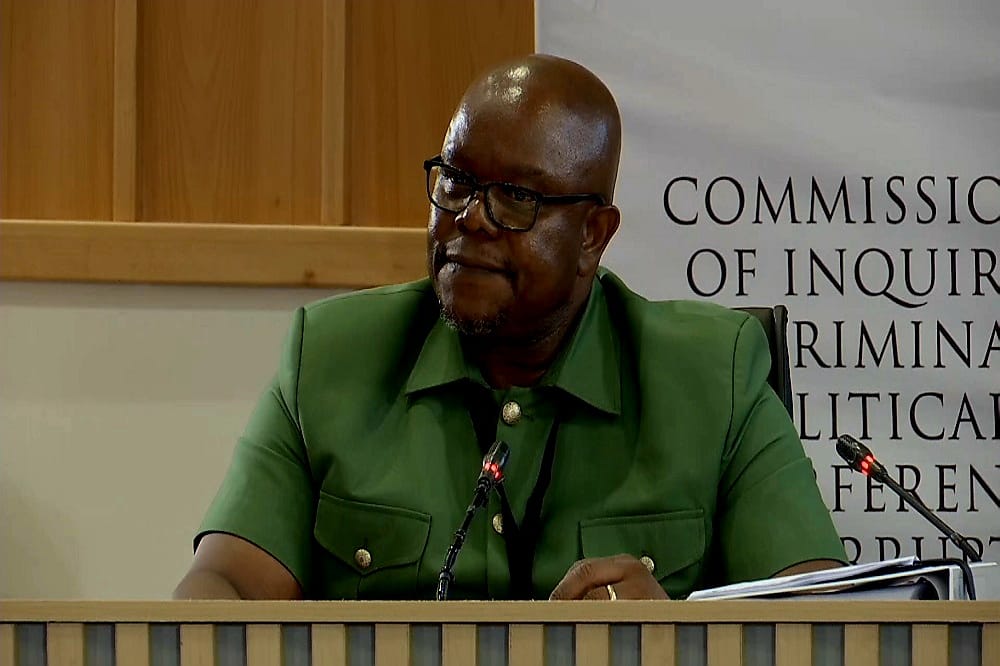
Major-General Lesetja Senona delivered a dramatic revelation at the ongoing Madlanga Commission of Inquiry on Friday, citing a WhatsApp message from General Mkhwanazi that has intensified scrutiny on alleged high-level corruption within South Africa’s law enforcement agencies.
During his testimony, Senona claimed that Mkhwanazi threatened to expose former police official Vusimuzi “Cat” Matlala to General Sibiya. The alleged exposure stemmed from Matlala reportedly informing Mkhwanazi about a bribe of R2 million and a property acquisition meant to benefit Sibiya. The claim, presented via a WhatsApp message, has added a digital dimension to the commission’s investigations, highlighting how modern communication platforms can serve as evidence in probing corruption.
“The message was explicit. It suggested that Matlala’s actions, involving the monetary transfer and property transaction, were of serious concern and could implicate high-ranking officers,” Senona told the commission, according to sources familiar with the proceedings. The testimony underscores the ongoing challenges facing the South African Police Service (SAPS) in ensuring accountability at senior levels.
The alleged bribe and property deal come at a time when the commission is meticulously examining patterns of misconduct, financial irregularities, and abuse of power among senior SAPS officials. Observers note that if the allegations are substantiated, they could have far-reaching implications, potentially prompting disciplinary action and legal proceedings against those implicated.
Political analysts say the WhatsApp message revelation is emblematic of how informal communication channels increasingly serve as crucial evidence in anti-corruption investigations. “This case highlights the vulnerability of even high-ranking officials to scrutiny in the digital age. A simple message can unravel decades of opaque dealings,” said Professor Thandiwe Mokoena, an expert in governance and public accountability.
Senona’s testimony also raises questions about whistleblower protection within SAPS, as the allegations suggest internal threats and intimidation tactics against officers seeking to expose wrongdoing. Commission members have indicated that further probing will be necessary to verify the authenticity of the messages and the circumstances surrounding the alleged transactions.
As the Madlanga Commission continues to unravel these allegations, the public and law enforcement community alike are watching closely, anticipating potential reforms and accountability measures to restore confidence in South Africa’s police institutions.


