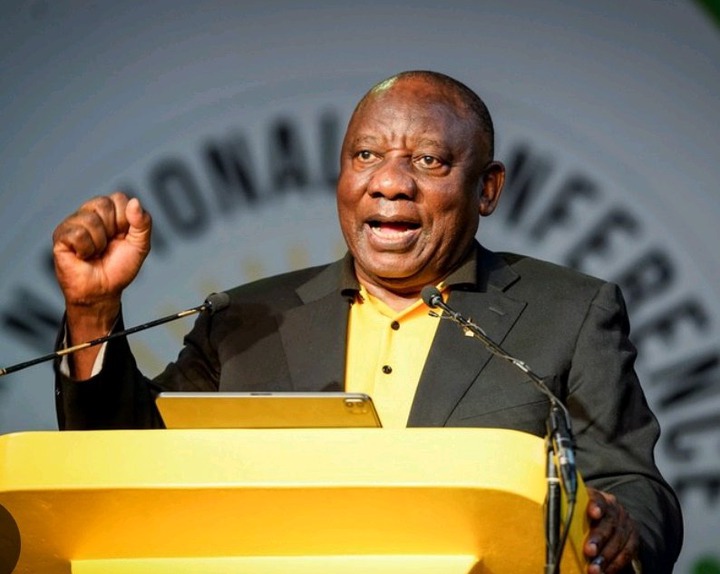
Cyril Ramaphosa, the President of the African National Congress (ANC), delivered a stirring speech that sent shockwaves through the ranks of the party. In it, he urged members to rid the ANC of patronage, corruption, and factionalism, and he urged a return to the organization’s fundamental ideals of service integrity and accountability.
However, Ramaphosa warned that internal splits and unethical tactics threaten to erode public trust. He made this statement while addressing party delegates and top officials. Ramaphosa defined the historic role of the African National Congress (ANC) as a vehicle for social transformation. “The African National Congress (ANC) must be a movement that stands above narrow interests,” he stated. The destiny of this organisation cannot be determined by factional conflicts or the distribution of jobs based on loyalty rather than competence. We cannot allow these processes to take place.
A strong emphasis was placed by the President on the importance of wisdom and discernment in the process of deploying leaders. He also insisted that positions of responsibility should be filled by the members who are the most capable and committed. According to Ramaphosa, our people are deserving of the very best that we have to offer. Individuals who are entrusted with leadership responsibilities are obligated to serve with honesty, vision, and an unwavering commitment to bettering the lives of ordinary South Africans.
Party insiders characterised the speech as a direct challenge to long-standing networks of patronage that have, over the course of time, damaged both the confidence of the public and the capacity of the government to govern. The statements made by Ramaphosa have been seen by analysts as indicating a renewed commitment to internal reform. The objective of this reform is to enhance accountability systems and reduce the power of factions that frequently prioritise personal benefit over the advancement of the nation.
In addition, the President of the African National Congress (ANC) underlined that combating corruption is not merely a matter of internal party politics but rather a moral necessity for the nation as a whole. He brought attention to recent examples of misconduct that have resulted in the delivery of services being compromised and the widening of inequality, and he urged members of the party to serve as a model for the ethical standards that are expected of public officials.
When Ramaphosa presented realistic actions for reform, the delegates applauded with cheers. These steps included increased vetting of candidates for leadership posts, clear decision-making processes, and tighter execution of disciplinary sanctions against members who were implicated in wrongdoing. He emphasised that the legitimacy of the institution is dependent on its capacity to employ capable leaders who are accountable to the people rather than to a limited number of factions inside the organisation.
The speech is seen by observers to have the potential to be a turning point in the ongoing struggle of the African National Congress (ANC) to reconcile its revolutionary past with the requirements of modern administration. One political analyst stated that this is a call for introspection and replenishment of one’s resources. Ramaphosa is bringing to the attention of the party the fact that the trust of the people is tenuous and that protecting it takes bravery, intelligence, and leadership that is guided by principles.
Ramaphosa was able to leave the delegates with a powerful reminder as the address came to a close. A movement for the people, the African National Congress (ANC) is not a club for personal gain. The commitment that we made to South Africa should be reflected in every action, every decision, and every appointment that we make. Let us make sure that this happens.
In the struggle against internal corruption and factionalism, the address has set the tone for what members of the party hope will be a crucial chapter. It has signalled the beginning of an era in which competence and integrity may finally take precedence over patronage and division.