

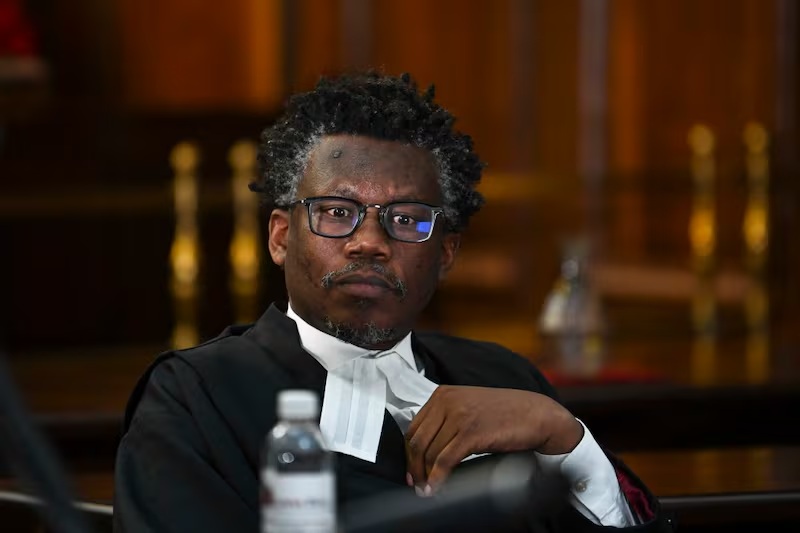
Advocate Tembeka Ngcukaitobi has announced that legal teams appearing before the Nkabinde Commission intend to challenge National Director of Public Prosecutions (NDPP) Advocate Shamila Batohi’s decision to leave the inquiry without official leave during her cross-examination. Ngcukaitobi made the statement during proceedings on Monday, underscoring the seriousness with which the commission and legal representatives are treating procedural compliance.
The incident occurred when Batohi, mid-testimony, informed the panel that she needed to consult with her legal counsel before continuing. While the NDPP later returned to provide further testimony, her temporary departure has raised questions about adherence to formal inquiry protocols. Ngcukaitobi, representing affected parties, emphasized that leaving the proceedings without formal permission could undermine the integrity of the cross-examination process.
During the commission hearing, Ngcukaitobi stated that the decision to walk out would be formally challenged, arguing that witnesses under oath are expected to remain present unless excused by the panel. He highlighted that, as the head of the NPA and a senior advocate, Batohi should be fully aware of the procedural rules governing her conduct during public inquiries.
[WATCH] Adv. Tembeka Ngcukaitobi tells the Nkabinde Commission they will challenge Adv. Shamila’s Batohi’s decision to abandon the inquiry without leave during her cross-examination.#Newzroom405 pic.twitter.com/UVSl2F1PzR
— Newzroom Afrika (@Newzroom405) December 15, 2025
Observers have noted that the dispute reflects the broader tension between legal strategy and procedural expectations. While consulting legal counsel is a common practice in complex hearings, the manner in which Batohi temporarily exited has sparked debate among legal practitioners and analysts about the boundaries of discretion for senior officials in public inquiries.
Ngcukaitobi’s announcement signals that the legal team will seek clarification from the commission on how to address the procedural breach and ensure that testimony is recorded appropriately. He stressed that challenging the NDPP’s action is not intended to impede the inquiry but to uphold standards of accountability and due process.
The Nkabinde Commission, which continues to examine allegations of misconduct and institutional oversight, has seen heightened scrutiny of senior officials’ behavior throughout its proceedings. Batohi’s actions have now become a focal point, drawing attention to the responsibilities of high-ranking prosecutors and the expectations of transparency in formal investigations.
As the commission progresses, the challenge flagged by Ngcukaitobi is expected to play a key role in shaping how procedural compliance is enforced. Legal experts anticipate that the ruling could have implications for how senior figures navigate public testimony and maintain both legal and ethical obligations during high-profile inquiries.


