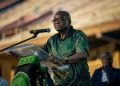
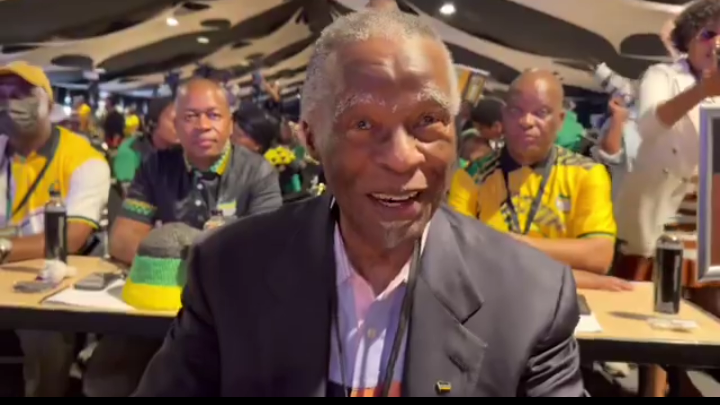
Former ANC President Thabo Mbeki has made a landmark return to the ANC National General Council (NGC), marking his first attendance since the pivotal 2005 gathering at the University of Pretoria. His presence, nearly two decades later, has injected both nostalgia and political gravity into proceedings, as the organisation continues to grapple with internal renewal, governance credibility and ideological direction.
Mbeki, who led the ANC from 1997 to 2007, remains one of the party’s most cerebral and influential figures. His re-emergence at this year’s NGC is widely interpreted as a symbolic and strategic development, reinforcing calls for intellectual discipline, ethical leadership and policy coherence within a movement navigating a rapidly shifting political landscape.
While the ANC has undergone leadership transitions, factional fractures and reputational turbulence since Mbeki’s departure from office, he has consistently articulated the need for principled organisational rebuilding. Delegates welcomed him warmly, acknowledging both his legacy and his enduring authority in shaping the party’s ideological compass.
Political observers argue that Mbeki’s participation is not merely ceremonial. It arrives at a time when the ANC is forced to confront questions of state capacity, economic stagnation, corruption culture and organisational decline. His history with the NGC is particularly significant: the 2005 sitting preceded a period of intense internal contestation that reshaped the movement and, ultimately, the country’s political trajectory.
In his engagements, Mbeki is expected to emphasise strategic governance thinking, diplomatic clarity and the restoration of the ANC’s intellectual culture—an ethos he long championed during his presidency. Senior party figures note that his voice could serve as a stabilising force amid attempts to recalibrate policy direction and reconnect with South Africans.
The NGC, traditionally tasked with reviewing progress and correcting course between national conferences, now carries amplified responsibility. With electoral performance under pressure and public trust eroded, the ANC’s historical elders, including Mbeki, are seen as essential anchors in redefining its identity and reinforcing its founding mission.
As deliberations unfold, the spotlight remains firmly on whether this return signifies a deeper reintegration of veteran leadership into the centre of party renewal, or a momentary symbolic gesture in an era of transformation. What is clear is that Thabo Mbeki’s presence has reignited reflection, sharpened debate and reminded the movement of its once formidable ideological stature.
The ANC NGC continues through the weekend, with resolutions expected to chart the next chapter of organisational reform and political repositioning.