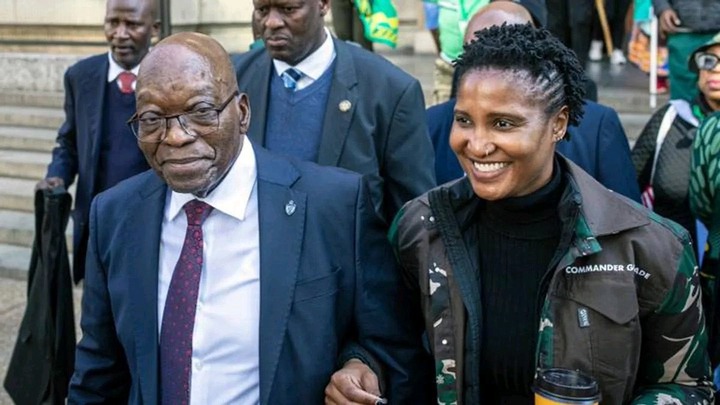

Phil Mphela, a commentator on South African entertainment, has noted the surprising way the public reacted to a report concerning Jacinta Ngobese-Zuma. Instead of harming her reputation, it seems to have boosted her support.
The issue led to a flurry of discussions online after claims surfaced that Ngobese-Zuma and her spouse had profited from government contracts while she continued to speak against the government. These allegations raised doubts among some people, who thought this news would harm her credibility and reduce her popularity with supporters.
However, the online response was quite the opposite. Many South Africans rallied to her defense, showing their ongoing loyalty and questioning whether these claims were sufficient to change their views on her.
Phil Mphela’s observations on this matter added further insight, emphasizing that an exposé meant to question a public figure might lead to unexpected reactions. Instead of creating the widespread outrage that some anticipated, the situation seems to have intensified discussions about Ngobese-Zuma and her role in society.
This reaction also highlighted the complex interactions between well-known individuals, political commentary, and social media followers. In South Africa, those who openly criticize authority can face harsh backlash but also gain devoted supporters. When accusations arise against such figures, public reactions can vary based on personal beliefs, political affiliations, and the trust individuals place in them.
For many of Ngobese-Zuma’s backers, the claims regarding the alleged government contracts did not outweigh their current support for her. Some seemed more focused on upholding her right to criticize the government, while others pondered whether these allegations required further evidence before being accepted.
Thus, the debate has moved beyond the initial claims, posing questions about accountability, political integrity, and how public opinion sways. It has also highlighted how social media can swiftly change a potentially harmful report into a chance for a public figure to gain renewed recognition and show the strength of their supporters.
Although the situation is likely to continue facing examination, the online response indicates that Ngobese-Zuma still holds an important position among those who engage with her public endeavors. The strong support she received reveals that negative coverage does not always result in reputational harm, especially when a public figure has a committed follower base.
In conclusion, the matter concerning Ngobese-Zuma underscores the unpredictable character of public sentiment. While the report raised important issues about claimed government contracts and her criticisms of the government, the reactions from numerous South Africans suggest that the controversy may have heightened her presence and strengthened her supporters’ loyalty.
As conversations proceed, providing more details about the accusations would be crucial for assisting the public in differentiating between assertions and verified information. At this moment, this incident has turned into yet another illustration of how debates can lead to surprising responses in South Africa’s growing online community.