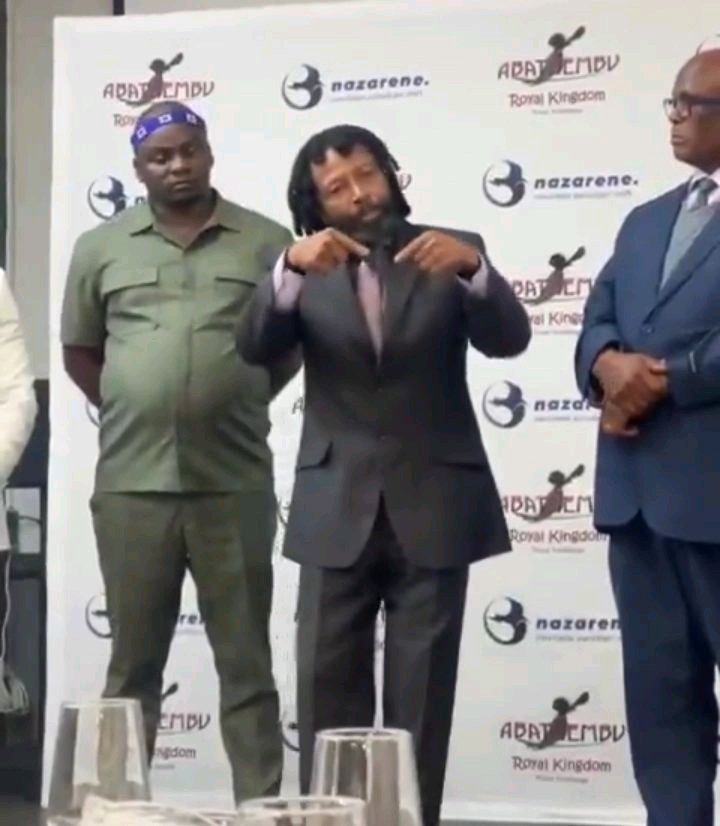
King Buyelekhaya Dalindyebo has publicly expressed strong dissatisfaction with the African National Congress (ANC), saying he wants to completely distance himself from the governing party.
The AmaThembu monarch made the remarks in a strongly worded statement in which he appeared to reject any further association between himself, his traditional authority and the ANC. His comments signal a significant expression of frustration with the party and its continued leadership of the country.
“I’m expressing deep anger that no ANC should continue ruling. Deep anger. So I no longer want anything to do with the ANC — not in my house, not in my land, not in my space,” Dalindyebo said.
The king’s statement has attracted attention because of his position as a traditional leader in the Eastern Cape, an area that has historically been regarded as one of the ANC’s political strongholds.
His comments come against the backdrop of increasing debate over the governing party’s performance and its ability to maintain the support it has traditionally enjoyed in various communities. Issues including service delivery, unemployment, economic difficulties and concerns over governance have contributed to growing political dissatisfaction in parts of the country.
By emphasizing that the ANC should have no place in his “house,” “land” or “space,” Dalindyebo appeared to underline the seriousness of his position. The statement suggests that his objection extends beyond ordinary political criticism and reflects a desire to separate his traditional domain from the party.
The monarch, however, did not announce support for another political party or reveal which organisation he might favour instead. His declaration was focused primarily on rejecting further association with the ANC.
The remarks could also reignite discussions about the relationship between South Africa’s traditional leaders and political organisations. Traditional authorities continue to play an important role in many communities, particularly in rural areas, where political developments can intersect with traditional leadership and local governance.
Dalindyebo’s comments may consequently become part of the wider conversation surrounding the ANC’s political future and its changing relationship with communities that have historically supported it.
For now, the AmaThembu king has made his position clear, publicly voicing his anger and declaring that he no longer wants the ANC connected to his personal space or traditional territory.