

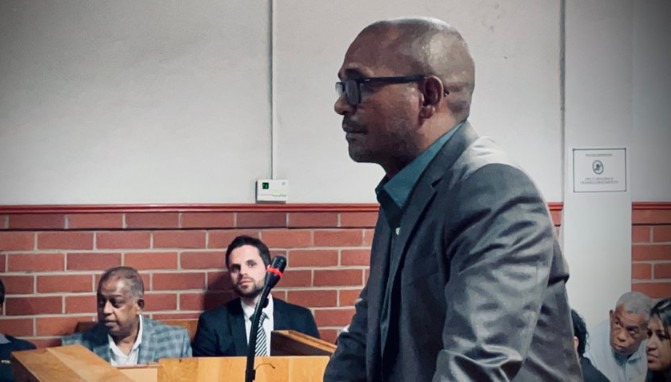
Proceedings of Parliament’s Ad Hoc Committee were disrupted after National Coloured Congress (NCC) President Fadiel Adams walked out of the meeting when the head of the Independent Directorate Against Corruption (IDAC), Advocate Andrea Johnson, declined to discuss a criminal case in which Adams is the complainant. The exchange created a tense atmosphere, highlighting the challenges of balancing parliamentary oversight with the integrity of ongoing criminal investigations.
The committee had convened to receive a briefing from IDAC on matters relating to its mandate and operations. During the engagement, Adams sought answers regarding the status of a criminal matter involving him. However, Johnson informed the committee that she would not comment on the case, explaining that she was uncomfortable discussing it because Adams was the complainant and the matter remained subject to legal processes.
Johnson maintained that providing details about an active investigation in such circumstances could compromise established legal protocols and potentially undermine the independence of investigative processes. She stressed that IDAC was committed to conducting its investigations professionally and without external influence, regardless of the identities of those involved. Her response underscored the importance of preserving the integrity and impartiality of ongoing criminal proceedings.
Adams expressed dissatisfaction with Johnson’s refusal to address the issue, arguing that Parliament’s oversight role should allow committee members to seek accountability from public institutions. Following the exchange, he left the committee meeting before proceedings concluded. His departure drew attention from fellow committee members, although discussions continued after he exited the venue.
The incident has renewed debate about the limits of parliamentary oversight when it intersects with active criminal investigations. While committees have the authority to question state institutions on their performance and accountability, legal experts have frequently cautioned that discussing specific ongoing cases in public forums may prejudice investigations or affect the rights of individuals connected to those matters.
Committee members continued engaging IDAC on broader issues relating to its operational capacity, investigative priorities, and institutional independence. Johnson reiterated that the directorate remains committed to combating corruption through lawful, impartial, and evidence-based investigations, while respecting constitutional safeguards and the rule of law.
The confrontation is likely to attract further political attention as Parliament continues scrutinizing the work of IDAC and other law enforcement agencies. Whether the matter involving Adams will be raised again in an appropriate forum remains uncertain, but the exchange has highlighted the delicate balance between ensuring accountability through parliamentary oversight and protecting the integrity of criminal investigations that are still underway.


