

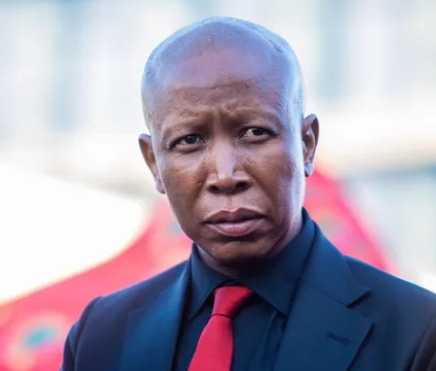
Economic Freedom Fighters leader Julius Malema delivered a firm defense of African unity during an international political gathering in Botswana, where he strongly criticized anti-immigrant hostility and rejected claims that South Africa is fundamentally xenophobic.
Speaking at the Botswana National Front National Conference in Jwaneng on Sunday, 19 July 2026, Malema addressed Botswana’s President Duma Boko, emphasizing that hostility toward foreign nationals does not reflect the values of the broader South African public.
In his address, Malema argued that the peoples of Africa remain inextricably linked by history, shared culture, cross-border family ties, and common struggles. He stated that citizens who target migrants from neighboring countries such as Botswana, Zimbabwe, Mozambique, and Nigeria are acting out of self-hatred rather than patriotism, ultimately undermining the goal of continental integration.
During the speech, the EFF commander-in-chief singled out specific anti-immigration activists and groups, including Jacinta MaNgobese Zuma, Ngizwe Mchunu, and Phakelumthakathi. He characterized them as a vocal minority whose views do not represent the country as a whole, accusing them of spreading fear and driving wedges between African nations. Malema urged citizens to treat fellow Black Africans with solidarity, reiterating his long-held political vision for a unified continent with open borders.
The remarks drew immediate reaction back home, highlighting the deep political divisions surrounding migration policy in South Africa. Supporters praised Malema for maintaining a principled pan-African stance against violence and discrimination. Conversely, critics argued that his speech minimized legitimate public concerns regarding unmanaged borders, high national unemployment, strain on local infrastructure, and rising crime rates.
Beyond border issues, Malema addressed domestic political strategy, explicitly dismissing any future coalition efforts with center-right and right-wing political parties like the Democratic Alliance or the Freedom Front Plus.
He asserted that entering into formal agreements with those organizations would compromise his party’s core values. The address underscores how the complex debates over immigration, national identity, and regional cooperation continue to shape political discourse across Southern Africa


