

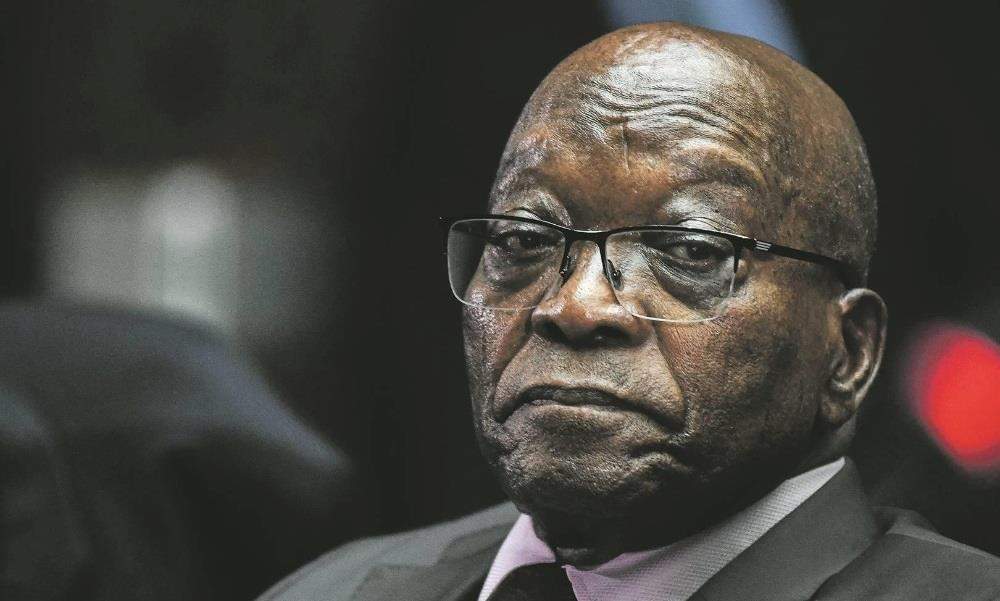
Former President Jacob Zuma has opened up about his relationship with President Cyril Ramaphosa, offering candid reflections on their political journey, leadership differences, and the current state of South Africa.
Speaking during a recent engagement, Zuma acknowledged that he and Ramaphosa had worked closely together during the struggle against apartheid and in the early years of South Africa’s democratic transition. However, he noted that their political paths later diverged, resulting in differing visions for the country and the governing party.
Zuma said that while political disagreements are common in democratic systems, he believes the differences between himself and Ramaphosa have been amplified by broader debates within South African politics. He stressed that his criticism of the current administration should not be viewed as a personal attack but rather as part of a broader discussion about governance, economic transformation, and the future direction of the country.
The former president argued that South Africa continues to face significant socio-economic challenges, including unemployment, poverty, and inequality. According to Zuma, stronger efforts are needed to address the concerns of ordinary citizens and accelerate economic opportunities, particularly for young people.
WATCH: Former President Jacob Zuma on President Cyril Ramaphosa and their relationship and other matters.
🎥 SABC News pic.twitter.com/2wahWpfCF8— Sihle Mavuso (@ZANewsFlash) June 19, 2026
On his relationship with Ramaphosa, Zuma maintained that political leaders should be able to disagree while still respecting democratic institutions. He said that despite their differences, both men share a history rooted in the liberation struggle and a commitment to South Africa’s development.
Zuma also reflected on the evolution of the African National Congress (ANC), saying the organisation faces a critical period as it seeks to maintain public confidence and respond to changing political dynamics. He expressed concern about divisions within the party and called for greater unity among leaders and members.
The former president further discussed the emergence of new political formations, arguing that South Africa’s democratic system allows citizens to choose leaders and parties that best represent their interests. He said political competition should ultimately serve the interests of the people rather than individual politicians.
Addressing the country’s future, Zuma called for constructive dialogue among political leaders, civil society, and communities to find solutions to national challenges. He emphasised the importance of accountability, effective leadership, and policies that deliver tangible benefits to citizens.
As South Africa continues to navigate a complex political landscape, Zuma’s remarks are likely to reignite debate about the country’s leadership, the legacy of former administrations, and the relationship between some of the nation’s most influential political figures, including Jacob Zuma and Cyril Ramaphosa.


