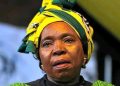
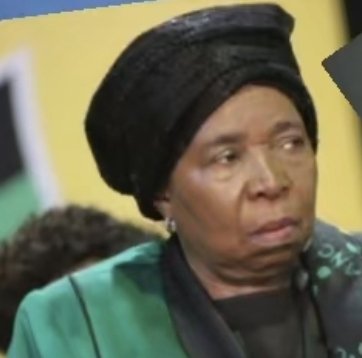
Former President Jacob Zuma has come under renewed scrutiny following allegations that he issued instructions to the then National Commissioner of the South African Police Service (SAPS) to use state resources in support of Nkosazana Dlamini-Zuma’s bid for political leadership.
The claims, which have resurfaced in public and political discussions, allege that Zuma directed the former police chief to assist in securing Dlamini-Zuma’s election during a highly contested period in South African politics. Critics argue that, if proven, such actions would represent a serious abuse of state resources and a violation of the principle that law enforcement agencies should remain politically neutral.
The allegations have reignited concerns about the relationship between political leaders and state institutions during Zuma’s presidency. Analysts say the claims reinforce long-standing debates about the extent to which government structures may have been influenced by political interests at the time.
Supporters of Zuma have previously dismissed similar accusations as politically motivated, maintaining that no credible evidence has been produced to demonstrate that state institutions were unlawfully used to advance factional political objectives. They argue that allegations alone should not be treated as proof of wrongdoing.
The controversy comes as South Africa continues to grapple with issues of governance, accountability, and public trust in key state institutions. Civil society groups have repeatedly called for greater transparency and stronger safeguards to ensure that government resources are never deployed for partisan political purposes.
Political observers note that allegations involving the use of security agencies for political ends are particularly sensitive because they strike at the heart of democratic governance. The independence of institutions such as SAPS is widely regarded as essential to maintaining public confidence in the rule of law.
While the claims continue to generate debate, no court ruling has conclusively determined the legality of the alleged actions. Nevertheless, the accusations have once again placed Zuma’s legacy under the spotlight and revived discussions about the need for accountability within South Africa’s political and security structures.
As public interest grows, many South Africans are likely to watch closely for any further evidence, investigations, or official responses that could shed more light on the matter.