

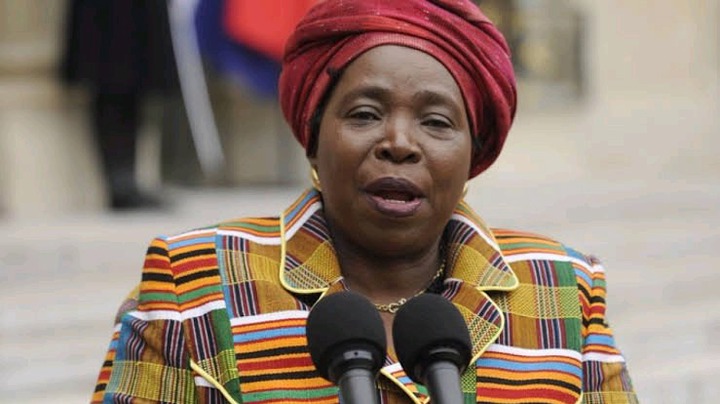
Former African Union Commission Chairperson Dr. Nkosazana Dlamini-Zuma has weighed in on South Africa’s immigration debate, arguing that the country’s high unemployment rate cannot be resolved simply by deporting undocumented foreign nationals.
Speaking in a video interview that gained widespread attention on Thursday, the former Home Affairs Minister acknowledged that illegal immigration is a concern and should be properly managed. However, she stressed that blaming migrants for unemployment oversimplifies a much deeper economic problem. According to Dlamini-Zuma, meaningful solutions require structural economic reforms, industrial growth, and investment in skills development rather than focusing solely on removing undocumented immigrants.
Her remarks differ from the growing populist narrative in South Africa, where some political groups and civic organisations have increasingly linked foreign nationals to the country’s economic struggles and job shortages. These groups have been advocating for large-scale compliance operations targeting undocumented migrants.
Drawing from her experience at the African Union, Dlamini-Zuma referenced the vision of a more integrated Africa under Agenda 2063. She noted that migration across the continent has often been driven by factors such as conflict, poverty, and uneven development. She argued that restrictive immigration measures alone are unlikely to solve the root causes of these challenges.
Instead, she called for policies that promote economic fairness, strengthen local industries, boost agricultural production, and create sustainable employment opportunities. In her view, deportations should not be seen as a complete solution to unemployment.
Her comments sparked intense reactions online. While critics accused undocumented workers of lowering wages and competing with South Africans in sectors such as construction, hospitality, and informal trade, supporters—including civil rights advocates and pan-Africanist groups—praised her balanced perspective and efforts to encourage a more constructive discussion on immigration and economic development.


