
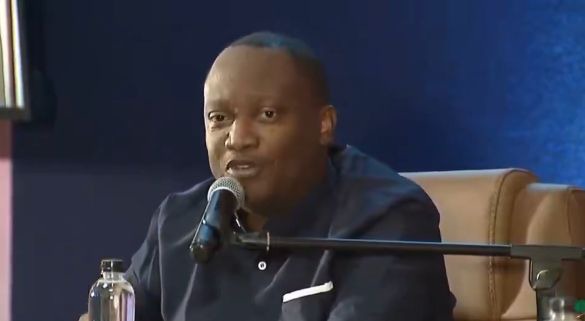
Media and political commentator JJ Tabane has stirred public debate after delivering a sharp critique of the Public Protector during a live discussion, stating: “I want to tell you now Public Protector, you are a Public Protector and you are a disgrace—come and arrest me now.”
The remarks, made during a political panel, have drawn strong reactions online and within political circles. While some have commended Tabane for voicing what they see as widespread public frustration, others have condemned the comments as an affront to a constitutionally mandated body.
His statement appears aimed at South Africa’s Public Protector, an independent office tasked with investigating misconduct in government and safeguarding citizens from abuse of power. Though Tabane did not specify the incident that prompted his criticism, the outburst has reignited discussions about the performance and legitimacy of Chapter 9 institutions, which are designed to uphold democracy and accountability.
Analysts suggest the backlash reflects mounting public skepticism toward oversight bodies, particularly in cases involving high-level political figures. At the same time, concerns have been raised that openly challenging such institutions may weaken trust in democratic frameworks.
To date, the Public Protector’s office has not responded officially, and it is uncertain whether formal action will be taken against Tabane.
Public reaction on social media has been deeply split. Some view his words as bold and representative of popular opinion, while others stress the need for public figures to engage state institutions with respect and responsibility.
Tabane, long recognized for his blunt commentary and combative style, has often played a central role in national debates on governance and leadership. This latest episode is likely to deepen conversations around free speech, political accountability, and the function of independent bodies in South Africa’s democracy.
The incident unfolds amid rising political tensions and increased scrutiny of public institutions, especially regarding their handling of allegations against government officials.
As the discourse unfolds, observers note a growing trend toward more confrontational rhetoric in South African politics, where criticism of official bodies is becoming more direct and widely echoed in public forums.


