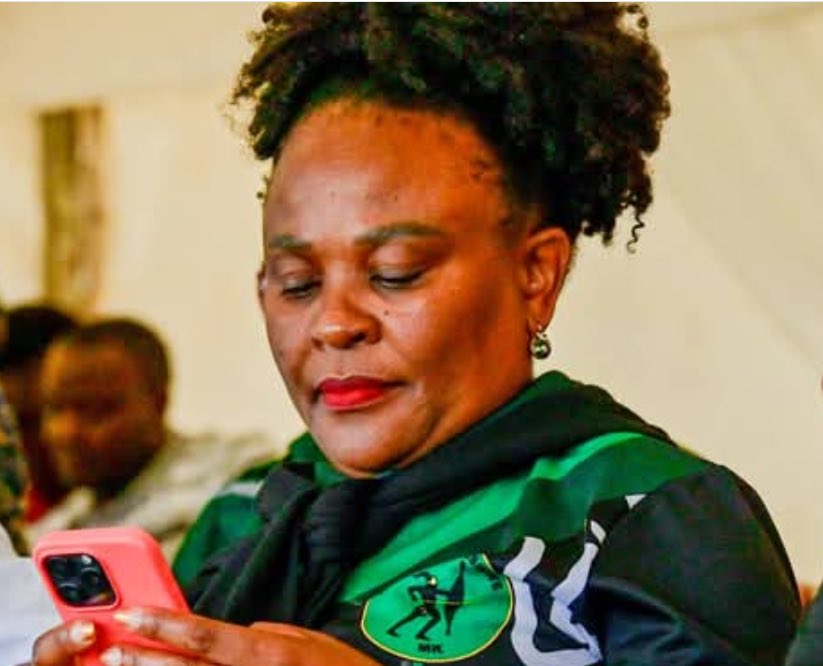
The ongoing dispute involving Busisiwe Mkhwebane, the previous Public Protector, alongside her spouse, has placed Nkandla at the heart of a fierce political argument. Allegations and diverse viewpoints have surfaced, bringing Nkandla, known for its significant political history, back into the national limelight.
Both supporters and opponents of the recent events have been participating in intense debates, both on social media and in public gatherings. These discussions focus on accountability, the fairness of the actions taken, and the potential legal consequences. Central to this conflict are political statements and public accusations that have stirred strong feelings, especially in Nkandla, an area historically linked with political conflict.
Although the latest allegations have yet to be resolved by a legal authority, public backlash clearly illustrates how divisive Busisiwe Mkhwebane is in South Africa’s political scene. Mkhwebane served as the Public Protector from 2016 until her dismissal in 2023 after being impeached. Throughout her time in that role and in the legal battles afterward, she has consistently claimed that she faced political harassment.
Her claims that influential figures sought to undermine her and her office were common throughout her tenure and during later court cases. Presently, her supporters continue to express this view, asserting that she was targeted as part of a larger attempt to silence dissent against established political powers. However, her critics have a markedly different view.
They argue that accountability procedures, including parliamentary actions and judicial decisions, were necessary due to what they see as ongoing governance issues. The heightened scrutiny of her private life, especially regarding her husband, has raised worries that political critiques are becoming excessively personal.
While holding leaders and former officials accountable is essential in a democratic society, political analysts warn that baseless claims and divisive rhetoric can undermine public confidence in government and the legal system. “South Africa has set guidelines for addressing alleged misconduct,” remarked one governance expert. “The risk occurs when public outrage and perceptions start to overshadow these established legal procedures.”
This renewed attention towards Nkandla arises amid a period of intensive political activity, with various parties trying to bolster their support ahead of upcoming elections. Observers suggest that revisiting past controversies, while contentious, can serve as an effective method for energizing party supporters and influencing public discussion.
This increased focus offers mixed responses from Nkandla’s residents. Some feel exhausted by their town’s constant link to scandals and national drama. Conversely, others view this attention as a possible chance to tackle long-standing issues related to governance and improvement in their community.
At this moment, there have been no fresh judicial decisions regarding the latest public claims against Busisiwe Mkhwebane or her partner. Voices from civil society are increasingly calling on political figures and commentators to show caution and allow legal processes to unfold appropriately.
It is evident, though, that Nkandla has once more turned into a central point for South Africa’s politically sensitive struggles. This acts as a strong reminder that ongoing disagreements still shape current happenings, and the distinction between responsibility and political tactics is still a matter of heated discussion.