

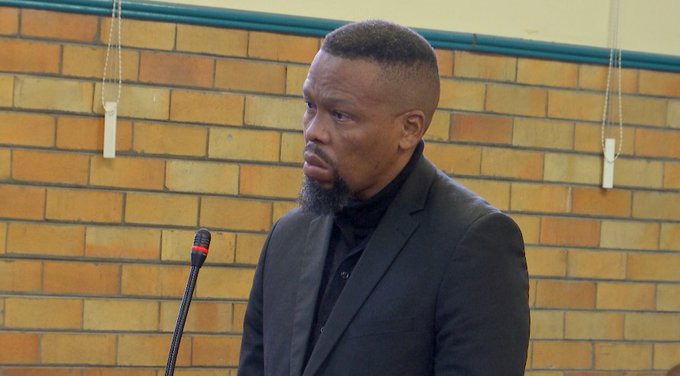
Matipandile Sotheni, a man accused of murdering commission witness Marius van der Merwe, presented a compelling, albeit potentially explosive, narrative during his ongoing bail application in the Brakpan Regional Court. The case, centered around the December 2025 assassination of van der Merwe, continues to unravel with serious implications for several individuals, including suspended Ekurhuleni Metro Police Department deputy chief Julius Mkhwanazi.
The courtroom on Monday heard Sotheni’s account, relayed through his legal team, arguing that the state’s case against him lacked sufficient evidence to establish guilt beyond a reasonable doubt. Sotheni faces sixteen charges related to the murder, a complex investigation stemming from van der Merwe’s testimony before the Madlanga Commission.
The commission’s investigation had previously implicated Mkhwanazi and others in the death of Emmanuel Mbhense. Legal proceedings are scheduled to resume on Thursday, May 21st, and will likely focus on the credibility of Sotheni’s claims.
What emerged from Sotheni’s affidavit, and was corroborated by his lawyer, Nthabiseng Mohamane, was a startling assertion: that Wiandre Pretorius, the man who ultimately took his own life following a reported failed hit, approached Sotheni seeking assistance with a “problem.” According to Sotheni’s statement, Pretorius specifically discussed finding someone to resolve this issue, leading Sotheni to believe that Pretorius’s intention was to have van der Merwe killed. This revelation adds a significant layer of complexity to an already fraught investigation.
It is a critical point that Pretorius’s suicide, occurring just days after reporting the alleged failed hit, has only intensified the scrutiny surrounding the circumstances of van der Merwe’s death. While the state will undoubtedly attempt to discredit Sotheni’s account, the suggestion that Pretorius was actively seeking to eliminate a key witness raises serious questions about the entire chain of events.
The fact that van der Merwe had previously implicated Mkhwanazi and others in the murder of Emmanuel Mbhense further complicates the picture, suggesting a potentially wider network of individuals involved. The defense’s strategy appears to be centered on casting doubt on the state’s ability to prove Sotheni’s direct involvement, focusing instead on the possibility that Pretorius, driven by his own troubled circumstances, may have acted independently.
However, the timing of Sotheni’s alleged conversation with Pretorius, occurring shortly after van der Merwe’s explosive testimony, cannot be ignored. It is a detail that will undoubtedly be heavily scrutinized as the legal proceedings continue, and the court will need to carefully assess the veracity of Sotheni’s claims.
The upcoming hearing on May 21st is expected to be pivotal in determining the direction of this ongoing and increasingly intricate case.


