

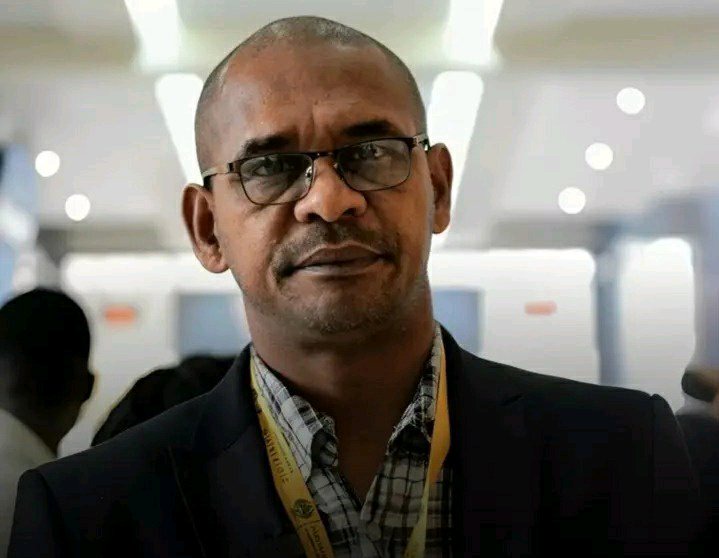
The leader of the National Coloured Congress, Fadiel Adams, has launched a direct and scathing public critique against the KwaZulu-Natal Provincial Police Commissioner, Lieutenant-General Nhlanhla Mkhwanazi. Adams’s core accusation is that the Commissioner is engaged in a calculated exercise of manipulating public sentiment and deliberately obfuscating the truth through his recent high-profile public communications.
In a sharply worded social media post published on a Monday, Adams made it clear he was “not impressed” by the Commissioner’s statements, which have recently captured significant national attention against the backdrop of evident internal institutional discord within the South African Police Service (SAPS). Adams asserted that the South African populace is being misled by a performance, emphatically stating that what Mkhwanazi is currently “selling is not the truth it’s theatre,” suggesting a carefully orchestrated display designed for maximum effect and minimum substance.
This forceful intervention from the NCC leader is directly prompted by Mkhwanazi’s recent media appearance where he formally retracted significant allegations he had previously made against the national Police Minister, Bheki Cele. This move by Mkhwanazi was immediately interpreted by political and security analysts as a public manifestation of the deep-seated political fissures and profound internal tensions that characterize the power dynamics within the upper echelons of SAPS leadership.
While a segment of the public and commentators commended the retraction as an admirable display of professionalism, suggesting a desire to prioritize the institution over personal conflict, others, most notably Adams, have dismissed the action as nothing more than a carefully considered act of political damage control. Adams maintained that “Real leaders take accountability, not applause,” strongly implying that Mkhwanazi’s sudden reversal was not borne of ethical integrity or genuine change of heart, but rather yielded to considerable internal or political pressure exerted from powerful entities. He issued a warning to the South African public, urging them to critically “look beyond the uniform and the speeches” in order to discern the underlying power struggles and factional infighting that he believes are critically shaping the function and deployment of policing resources within the strategic province of KwaZulu-Natal.
The fiery comments from Adams resonate with and reflect an observable, growing impatience and frustration among various opposition political leaders. These parties have consistently voiced concerns over what they describe as intensive, politically motivated “image management” and narrative control being exercised within key national law enforcement agencies. The public feud, now escalated by Adams’s pointed criticism, not only underscores the widening and increasingly unsustainable gap between the polished public perception of policing leadership and the often-volatile internal political reality within SAPS but also inevitably raises profound and troubling questions regarding the extent of transparency and accountability that can be expected from the very highest tiers of the South African Police Service’s command structure. The enduring conflict between these prominent political figures and the province’s top police leadership has the immediate effect of destabilizing public confidence at a time when effective and impartial policing is critically needed to tackle escalating crime.


