

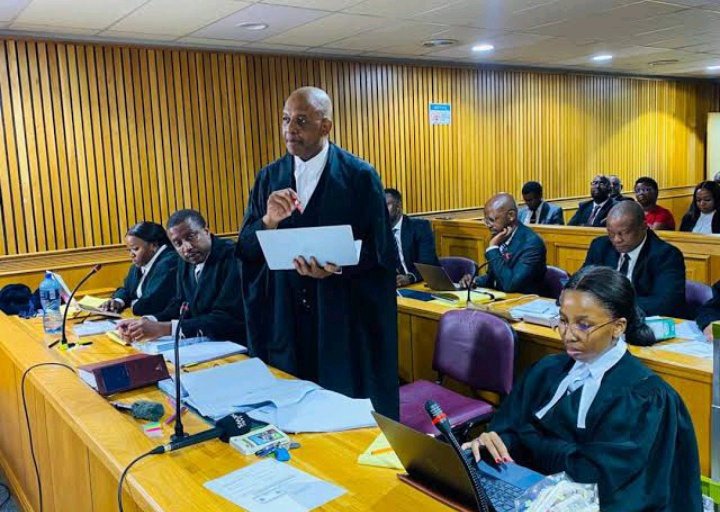
As the legal difficulties surrounding the African National Congress (ANC) provincial conference in KuGompo City entered yet another important phase, attorneys Dali Mpofu and Ayanda Bodlani made an appearance in the East London High Court on Thursday morning when the meeting was taking place. Their presence comes before the court’s consideration of an application for contempt of court, which has increased the level of political scrutiny and created questions about whether or not earlier legal directions related to the contested gathering have been complied with.
Specifically, the application is based on allegations that certain provincial leaders of the African National Congress (ANC) disobeyed an existing court order that had warned against moving forward with certain portions of the conference until remaining legal concerns were addressed. charges of procedural irregularities, factional favouritism, and challenged accreditation processes are at the heart of the internal conflict that has been going on for some months. Opponents say that these charges fundamentally compromised the integrity of the event.
Mpofu and Bodlani, who both represent parties interested in the dispute, arrived to a full courtroom as supporters and critics of the conference gathered outside. This served to illustrate the increasingly polarised climate that exists within ANC institutions in the Eastern Cape. Their participation underlines the seriousness with which the litigants are pursuing clarity and responsibility, which is particularly important in a province that has been marked for a long time by hotly disputed leadership battles.
As the judge prepared to address the question of whether or not the respondents had, in fact, violated the earlier order, the atmosphere within the courtroom remained heated but orderly through the proceedings. In the event that the court determines that there are grounds for contempt, the verdict has the potential to destabilise the outcomes of the conference and plunge the provincial structure into yet another cycle of legal and political uncertainty. A ruling that is in support of compliance, on the other hand, may increase the validity of the contested sitting and promote the faction that emerged triumphant in KuGompo City.
In the eyes of observers, the issue is more than just a matter of procedural grievances; rather, it is a reflection of the larger struggle for power that occurs in advance of national decision-making cycles. Control of the provincial structure is strategically vital for both rising and established factions within the African National Congress (ANC) thanks to the fact that Eastern Cape has historically played a key role in internal ANC disputes.
It is anticipated that the court would hold off on making a decision until it has heard the arguments presented by both legal teams. If it does eventually make a decision, it will most likely establish a precedent for how political parties handle judicial involvement in internal issues. While the high-stakes court struggle continues to develop under the scrutiny of the nation, the focus of attention continues to be squarely on Mpofu and Bodlani for the time being.


