

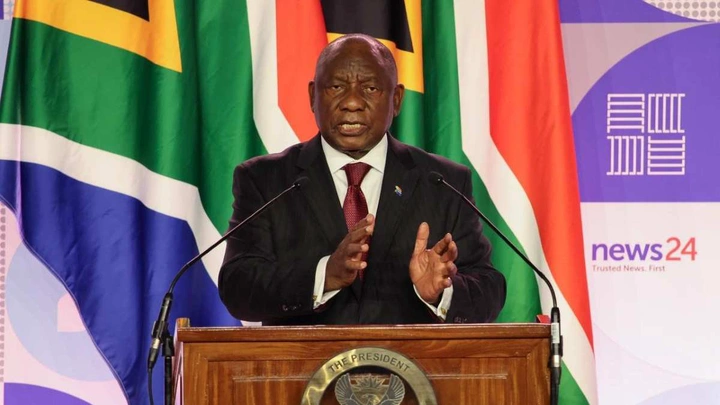
With the court procedures moving into the defence phase, the long-running Phala Phala issue, which is connected to South African President Cyril Ramaphosa, has entered a crucial new stage. The story, which has been the subject of intense public and political scrutiny ever since it was brought to light for the first time, revolves around the alleged theft of a significant amount of foreign cash from Ramaphosa’s Phala Phala game farm in Limpopo in the year 2020, as well as the subsequent management of the incident.
The charges that the theft was not reported through the normal channels of law enforcement and that state resources may have been used in an illegal manner in the process of seeking out suspects are at the core of the controversy. President Ramaphosa has repeatedly denied any wrongdoing, stating that the cash were the proceeds from genuine wildlife sales and that all steps taken in reaction to the incident were appropriate. He has also maintained that the funds were obtained from legitimate wildlife sales.
At the beginning of the defence phase, it is expected that legal representation will contest major aspects of the accusations. These aspects include the credibility of witnesses and the interpretation of events that were presented during previous phases of the case. It is generally agreed upon that this phase is crucial because it provides the legal team representing the president with the opportunity to destroy claims that have been the source of political opposition and public debate for a number of months.
The investigation has also attracted the attention of a number of notable individuals, such as Arthur Fraser, a former director-general of the State Security Agency. Fraser was the one who initially filed the criminal complaint that pushed the topic to the forefront of public attention. The assertions that Fraser has made regarding the incident, which Ramaphosa’s team has aggressively denounced as being politically motivated, include allegations that the incident constituted major violations of the law, including kidnapping and money laundering.
According to observers, the transfer into the defence phase has the potential to greatly alter both the outcomes of the legal proceedings and the perceptions of the political system. In light of the fact that the political atmosphere in South Africa is already characterised by heightened tensions, the case has evolved into something more than a legal battle; it is now a test of the integrity of institutions and the accountability of leadership.
Experts in the field of law believe that the defence will most likely concentrate on procedural concerns, the chain of evidence, and the question of whether or not the activities made after the theft are within the confines of the law. In addition, there is the expectation that the defence may present fresh evidence or witnesses with the intention of bolstering the president’s account of the events that transpired.
There is still a significant amount of public interest in the proceedings, and political parties and civil society organisations are keeping a careful eye on the various events. While there are those who believe that this case is an important opportunity to strengthen the rule of law, there are others who warn against the possibility of politicising the judicial process.
As the courtroom battle intensifies, the outcome of the defence phase could have far-reaching implications not only for President Ramaphosa but also for public trust in South Africa’s justice system. Despite the fact that the legal and political stakes in the Phala Phala case are at their highest point, it remains to be one of the most significant issues in the recent history of the country.


