

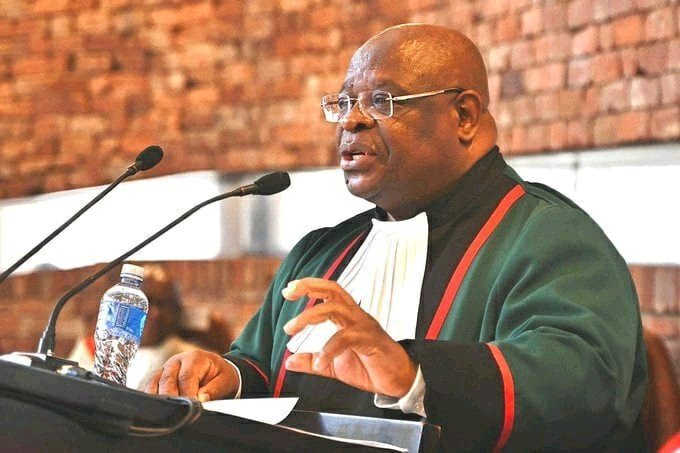
There has been a scathing evaluation of President Cyril Ramaphosa’s leadership that has been published by Raymond Zondo, who has previously held the position of Chief Justice. He has made it clear that he is quite dissatisfied with the fact that the nomination of individuals who have been linked to state capture to positions in the Cabinet is still being done. Zondo, who was the chairperson of the historic Commission of Inquiry into State Capture, stated that it had been one of the most challenging experiences of his life to preside over the swearing-in of ministers who had been directly involved in significant allegations of corruption. Zondo’s statement was made based on the fact that he had served as the head of the Commission.
While Zondo was addressing at a public debate on governance and accountability in Pretoria, he broke his silence on the occurrences that occurred after the commission. He issued a warning that the hesitation to take decisive action against persons who were implicated in the probe is sending the incorrect impression to the people of South Africa as well as the rest of the globe.
While I was taking the oath, I made a solemn pledge of allegiance to the Constitution. “It was excruciating for me to stand there and swear in people who I knew had been recommended for prosecution or disciplinary action by the very commission that I led,” said Zondo in his statement. “It was a painful experience.” To the point where it seemed as though the work that we had been doing for the preceding four years was of no importance.
After completing its report in 2022, the State Capture Commission came to the conclusion that some senior officials in the African National Congress (ANC) had committed serious violations of the law. The commission also suggested conducting investigations and instituting changes in order to prevent abuses of power of a similar sort in the future. Not only have a considerable number of individuals mentioned avoided prosecution, but they have also been re-elected or reappointed to crucial positions within the administration. This is despite the fact that they all have been listed.
Following the comments made by Zondo, a heated discussion has been rekindled over the constitutionality of political responsibility and the role that the presidency plays in the upkeep of ethical governance. Corruption Watch and the Ahmed Kathrada Foundation are two examples of civil society organisations that have expressed their support for Zondo’s statements. These organisations have also called for an investigation to be conducted by the parliamentary body into the reasons why a significant number of the commission’s recommendations have not been followed.
Ramaphosa, the current President of South Africa, has, for the most part, abstained from making any statements regarding the matter, despite the fact that he ran for office on a platform that highlighted anti-corruption and renewal. Analysts feel that his reluctance to act is the product of internal ANC factional pressures and fears of destabilising the party in advance of the 2026 elections. They came to this conclusion because they believe that his hesitation to act is the source of his unwillingness to act.
People who trusted the commission to clean up the system have been betrayed, according to Zondo, who added, “It is a betrayal.” Zondo describes the situation as “a betrayal.” “When reports are buried in dust and those who stole from the public are not held accountable for their actions, justice is not properly served.”
It is highly probable that his extraordinary public rebuke would enhance the amount of pressure that is being put on the presidency to re-examine the findings of the State Capture report and to take decisive moves towards re-establishing trust in public institutions. This is something that is being done.


