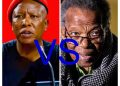
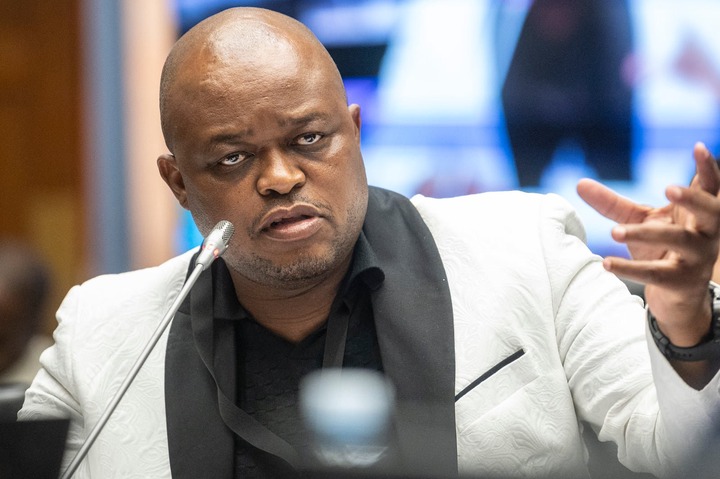
Brown Mogotsi has admitted that he initially refused to appear before a parliamentary committee because he was afraid of Economic Freedom Fighters (EFF) leader Julius Malema, a revelation that has stirred fresh political debate.
During his eventual appearance before Members of Parliament, Mogotsi acknowledged that apprehension about facing Malema—popularly referred to by supporters as “Timpakgolo”—played a significant role in his earlier decision to stay away. He described Malema as a formidable political figure whose presence in oversight proceedings can be intense and uncompromising.
Mogotsi did not allege threats or direct intimidation but suggested that Malema’s reputation for sharp questioning and confrontational debate left him uneasy about testifying. “I was scared,” he conceded, according to sources present at the committee session.
The statement quickly gained traction online, with some social media users amplifying claims that Malema is “a leader even feared by Donald Trump.” However, there is no verified evidence indicating that the former U.S. president Donald Trump has expressed any such sentiment. Analysts have cautioned against conflating online rhetoric with substantiated fact.
Malema, known for his fiery rhetoric and assertive style in parliamentary forums, has built a political brand centered on holding officials and witnesses to account. Supporters argue that his approach strengthens oversight and ensures transparency, while critics contend that it can create an atmosphere perceived as intimidating.
Political analyst Kabelo Ndlovu noted that parliamentary committees are constitutionally mandated spaces for accountability. “Regardless of who sits on the committee, appearing when summoned is a civic duty. Fear of political confrontation should not override institutional processes,” he said.
Mogotsi’s admission has prompted mixed reactions across the political spectrum. Some view his explanation as candid, while others question whether fear alone justifies non-compliance with parliamentary procedures.
The incident underscores the heightened tensions that often characterize South Africa’s political landscape, where personalities can become as influential as policy debates. As committees continue to exercise oversight functions, observers stress the importance of maintaining professionalism, due process, and mutual respect within democratic institutions.
For now, Mogotsi’s remarks have added another layer of intrigue to an already contentious political narrative—one that continues to unfold under intense public scrutiny.