

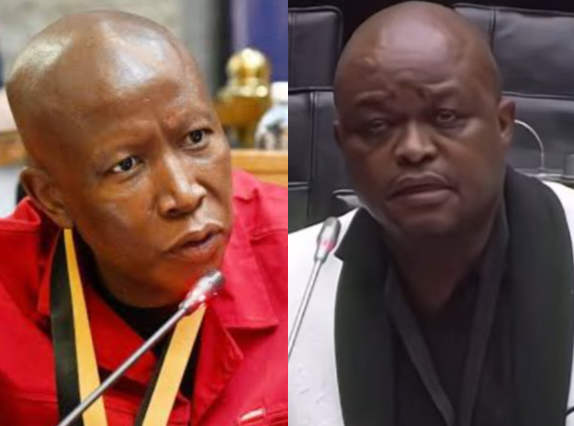
Tensions flared at the AdHoc Committee when Economic Freedom Fighters leader Julius Malema confronted controversial North West businessman Brown Mogotsi over his access to high-profile political figures – including President Cyril Ramaphosa.
During a heated exchange, Malema asked directly: “Do you have President Ramaphosa’s number, and how do you get it?”
Mogotsi responded without hesitation: “Yes, I have his, but I have forgotten where I got it from. I even have your number.”
The admission immediately stirred debate within the committee, raising concerns about how private contact details of senior political leaders circulate beyond official channels.
Mogotsi, who has frequently been at the centre of controversy in the North West province, appeared unfazed by the questioning. His claim that he possesses contact numbers of top political figures including Malema himself has intensified scrutiny over his networks and influence.
Brown Mogotsi says he also has Julius Malema’s numbers.
He goes around collecting people’s Cellphone numbers 😂😂😂😂😂😂😂😂
#MadlangaCommission#adhoccommitee pic.twitter.com/BxYsTg5Lto
— Msunu ka Johann Rupert (@ZizinjaAbelungu) February 24, 2026
When pressed further, Mogotsi suggested that gathering cellphone numbers is not unusual in political and business circles. Observers, however, argue that the casual nature of his response may point to deeper questions about access, lobbying practices, and informal communication channels between businesspeople and public officials.
Malema’s line of questioning appeared aimed at establishing how Mogotsi obtains sensitive contacts and whether such access translates into undue influence.
The exchange has sparked wider public discussion about transparency and boundaries between business and politics. While it is not uncommon for business leaders to have contact with politicians, the lack of clarity on how such details are obtained raises ethical considerations.
Critics argue that access to senior leaders’ private numbers may signal privileged proximity, while supporters insist that networking is an inherent part of political engagement.
The committee has yet to indicate whether it will pursue further inquiry into the matter. However, the moment underscored thebroader theme of accountability that continues to dominate proceedings.
The brief but pointed exchange quickly gained traction on social media, with the hashtag AdHoc Committee trending as users debated the implications.
For Malema, the question was strategic and deliberate. For Mogotsi, the answer was blunt and unapologetic.
Whether the revelation proves consequential remains to be seen – but it has certainly added another layer of intrigue to an already closely watched committee process.


