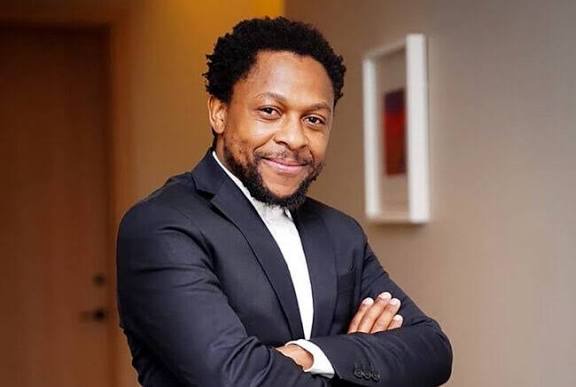
Mbuyiseni Ndlozi, a former member of parliament for the Economic Freedom Fighters (EFF), has sparked a new political discussion by stating that Thabo Mbeki is the world’s best post-apartheid president, while also harshly condemning the country’s recent economic trajectory.
It was a provocative question on social media that asked South Africans to choose the worst president the country has had since 1994. Ndlozi was responding to the topic with his response. In response, he published a comparative set of economic and crime statistics across administrations, beginning with F. W. de Klerk and ending with the current President Cyril Ramaphosa. He argued that only Mandela and Mbeki were able to achieve significant advances in comparison to the other governments.
By referring to the numbers that he provided, Ndlozi asserted that the president of Mbeki (1999–2008) was distinguished from subsequent governments by its higher yearly job creation, lower debt-to-GDP levels, and stronger growth in the gross domestic product. In contrast to this, he regarded the performance of the government during the Zuma and Ramaphosa administrations as deteriorating.
“At this rate, by the time Ramaphosa finishes his term in 2029, he will be worse than De Klerk,” Ndlozi stated, before concluding in a resounding manner, “FACT: MBEKI is the BEST PRESIDENT!”
The comments instantly elicited a variety of responses on the internet. Critics of Ndlozi’s comparison claim that it ignores key contextual elements, such as the global financial crisis that occurred during Jacob Zuma’s presidency and the COVID-19 epidemic that occurred early in Ramaphosa’s administration. Supporters of Mbeki noted to the period’s substantial economic development and fiscal consolidation as evidence of their position.
In addition, analysts point out that headline statistics like GDP growth and debt levels do not adequately convey governance outcomes, trends in inequality, service delivery, or the long-term structural difficulties that were inherited from apartheid. It was brought to the attention of others that the methodologies used to assess unemployment have evolved throughout time, which makes direct comparisons more difficult.
This conversation highlights how the disputes regarding South Africa’s presidential legacy continue to be highly contentious. Public perceptions are shaped by a variety of factors, including economic performance, trends in crime, and institutional reforms.
It remains to be seen whether Ndlozi’s evaluation will acquire wider support; nonetheless, the intervention has undoubtedly resurrected a national argument that has been going on for quite some time: who has the most effectively provided the finest benefits for democratic South Africa?