

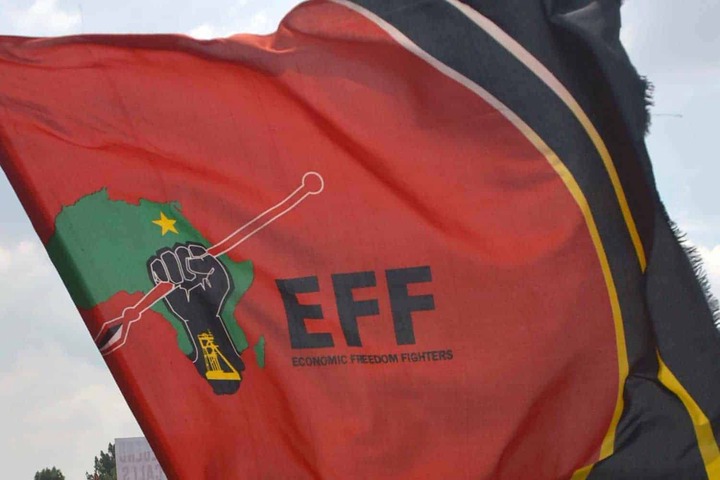
The Economic Freedom Fighters has called on the Special Investigating Unit to probe a R15 billion antiretroviral tender awarded to two companies that have since gone into business rescue, reigniting questions about procurement practices in the health department .
Tender Controversy
The tender was awarded to Barrs Pharmaceuticals and Innovata Pharmaceuticals, both subsidiaries of the Avacare Health Group and owned by a single individual . The EFF has raised concerns that proper due diligence was not conducted before the contracts were granted, particularly regarding the companies’ financial capacity to deliver .
EFF national spokesperson Sinawo Thambo said the party was alarmed that the tender was granted without proper financial evaluation of the companies’ ability to supply the medication . Days after the tender was awarded, both companies applied for business rescue in December 2025, with Hetero stepping in to supply the ARVs .
“The R15 billion ARV tender is characterised by irregularities which include but are not limited to granting of the tender to two companies owned by one person who on the product have a R1 price difference,” Thambo said, noting that previous tenders were cancelled on accusations of price collusion .
Parliamentary Scrutiny
The Portfolio Committee on Health has also expressed serious concern over the lack of due diligence . During a briefing with Health Minister Dr Aaron Motsoaledi, committee members questioned the department’s claims about local procurement .
The department indicated it is procuring at least 70% of its ARVs from local manufacturers . However, committee members disputed this, estimating that 70% of ARVs are actually imported, with only 30% produced domestically . This assessment is based on trade data showing companies listed as local manufacturers, including Emcure, Innovata, Barrs, Aurobindo and Viatris, are importing ARVs into South Africa .
Committee members questioned why local producers like Sunpharma, Cipla and Adcock Ingram were excluded in favour of importers, and why the department did not maximise the capacities of Aspen and Cipla, which could provide three million monthly patient treatments .
Minister’s Response
Motsoaledi told Parliament that patients will not be affected by the current controversy . He assured the committee that the drug supply at state facilities has not been impacted, with a three-month stockpile at clinics being standard practice .
“We believe that there is no impact on patients because we know our patients who are getting ARVs. We know where they get them,” he said .
The minister acknowledged that the department does not check the financial stability of companies applying for tenders, arguing it lacks the skills to examine balance sheets and outsourcing would be too expensive . He said the department depends on the Department of Trade, Industry and Competition to flag any problems with companies .
EFF MP Naledi Chirwa disputed this, stating that the Public Finance Management Act requires companies bidding for state contracts to show financial capacity .
Call for Investigation
EFF members in the portfolio committee suggested the committee recommend the SIU investigate the tender amid suspected irregularities . Chirwa said there were “too many red flags” and the tender process should be started afresh .
Motsoaledi said he would welcome such an investigation, telling the committee: “If you say bring the SIU, I welcome it with two hands. I will be the happiest person if that is done because there is an insinuation that I might have anything to do with it” .
Department CFO Phashwa Mamogale maintained that all bidding requirements were met when the tender was awarded and the department was not aware of the financial difficulties the companies would face .
State Pharmaceutical Company Debate
Thambo called on the department to prioritise building state capacity to supply ARVs, arguing this would prevent the private sector from taking advantage of government .
“Since 2014, the EFF has continuously warned the state and the department that failing to build state capacity and a functional state pharmaceutical company will result in the health prospects of our nation being compromised,” he said .
Committee members noted that discussions about a state-owned pharmaceutical company have been ongoing since a 2007 cabinet resolution, yet nearly two decades later, it remains unimplemented . They urged the government to revisit the matter and requested regular updates on progress .
The committee has requested written responses from the department regarding due diligence questions and is expected to continue discussions on ensuring transparency and accountability in the tendering process .


