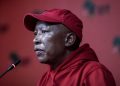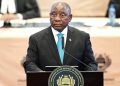
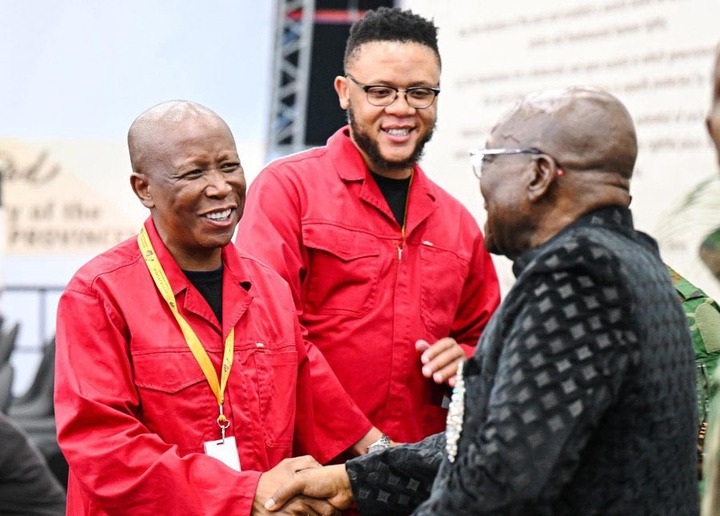
A dramatic moment unfolded in Parliament on Tuesday when former President Jacob Zuma crossed the floor to greet Economic Freedom Fighters (EFF) leader Julius Malema, shortly after the party successfully demanded that he be formally recognised in the House.
The exchange followed a tense standoff in which EFF Members of Parliament called the Speaker to order, insisting that Zuma, who was present in the chamber, be accorded the customary recognition given to former heads of state. The Speaker initially hesitated, prompting objections and procedural interventions from the red-clad MPs.
EFF representatives argued that parliamentary decorum and precedent required acknowledgement of a former president’s presence, regardless of political differences. They maintained that failure to do so undermined institutional respect and the dignity of the office Zuma once held.
The African National Congress (ANC), Zuma’s former political home, initially resisted the call. ANC MPs questioned the necessity of interrupting proceedings, suggesting that the debate should proceed without what they described as political theatrics. However, as pressure mounted and the EFF persisted with points of order, the ruling party ultimately conceded.
The Speaker then formally recognised Zuma in the House, restoring calm after several minutes of audible tension.
Moments later, Zuma rose from his seat and crossed the chamber floor to greet Malema. The gesture, brief but symbolically potent, drew reactions from across the political spectrum. Some MPs applauded lightly, while others watched in silence.
The interaction underscored the evolving dynamics between Zuma and Malema, whose political paths have intersected in complex ways over the years. Once allies within the ANC Youth League, the two later became fierce political adversaries. Tuesday’s encounter, however, projected a tone of civility and mutual acknowledgement.
Political analysts say the incident reflects broader contestations within Parliament about protocol, political identity and shifting alliances. The EFF’s insistence on recognition was seen as both a defence of parliamentary tradition and a strategic assertion of influence in the chamber.
While the proceedings eventually returned to the day’s scheduled agenda, the moment lingered as a vivid reminder of the personalities that continue to shape South Africa’s political landscape.
As the hashtag #EFFinParliament trended on social media, supporters and critics alike weighed in on what many described as a rare and striking display of cross-floor engagement in a frequently polarised legislature.