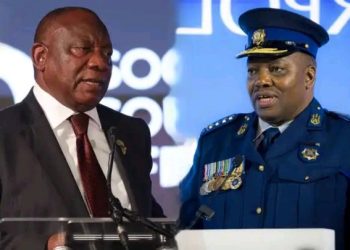
A public and legal confrontation has erupted between businessman Calvin Mathibeli and KwaZulu-Natal Provincial Police Commissioner Nhlanhla Mkhwanazi, after police confirmed they are preparing legal action over what they describe as defamatory accusations.
The dispute escalated this week following a strongly worded letter and social media posts by Mathibeli, who alleged that he had been subjected to a prolonged police “witch hunt” and claimed he was being personally targeted by Mkhwanazi. In response, the South African Police Service in KwaZulu-Natal issued a formal statement dismissing the claims as malicious, unfounded, and damaging to the integrity of the institution.
According to police, Mathibeli accused provincial authorities of being captured by business competitors and participating in corrupt schemes. Most seriously, he alleged that the provincial commissioner had issued an instruction that he be harmed — a claim police categorically deny. Authorities emphasized that a recent operation at Mathibeli’s business premises was led by national structures, not the KZN provincial office, and said linking it to Mkhwanazi was reckless.
Police officials further stated that Mathibeli’s public remarks had effectively invited scrutiny into his business affairs. In their statement, they revealed that investigators have since identified his company as a beneficiary of a Gauteng Department of Health tender, and indicated that this and other dealings may now fall under examination. The tone of the response suggests the matter could evolve into a broader legal and investigative battle.
The statement also referenced testimony previously given at the Madlanga Commission, where Mkhwanazi discussed operational challenges in the province. Police argued that Mathibeli’s selective interpretation of that testimony was misleading and part of a calculated smear campaign.
KZN authorities say the legal action aims to protect the credibility of the police service and restore public confidence at a time when trust in law enforcement remains fragile. They stressed that any legitimate complaints against officers must be reported through formal oversight channels, not aired through public accusations that could inflame tensions.
Mathibeli has not yet issued a follow-up response since the police announcement. Legal analysts say the confrontation could test the boundaries between freedom of expression and reputational harm, while also drawing attention to the complex relationship between business interests and state institutions.