

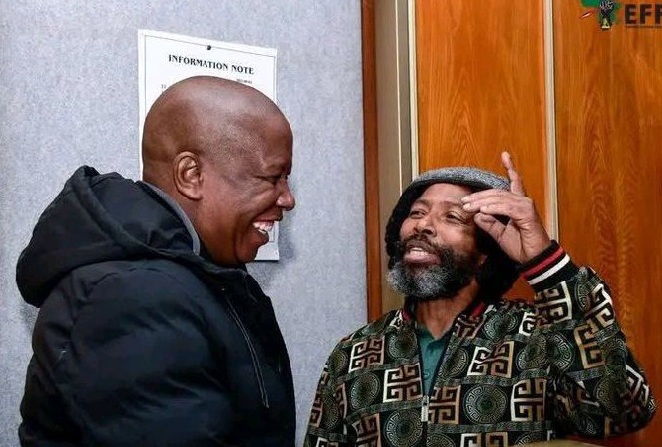
In a surprising criticism of the Economic Freedom Fighters (EFF) leader who had previously stood firmly with him, King Buyelekhaya Dalindyebo publicly referred to Julius Malema as “a sleepwalker,” igniting a new political maelstrom. Given the EFF’s prominent backing during Dalindyebo’s court fights, the statements of the outspoken monarch have rekindled debates about appreciation, loyalty, and changing political allegiances.
The Economic Freedom Fighters were the ones who threw the AbaThembu king a party to celebrate his release from prison. Members of the party greeted his return with heroism, throwing a party greeting that was broadcast across the country. As a sign of unity, the EFF allegedly bought the monarch a Mercedes-Benz for R1.2 million. There was more to Malema’s support than just lip service. The fact that he was the sole well-known politician to pay a visit to Dalindyebo while he was in prison was widely seen as an indication of his profound personal and political dedication.
KING BUYELEKHAYA DALINDYEBO
Each Chiefdom in my land will now have a ward councillor from ATM.
I tried to assist Julius Malema and his EFF cult to secure the votes of my subjects.
Unfortunately, I discovered that Julius is sleepwalking. He could not mobilise a single… pic.twitter.com/1cpa5UtCxC
— Constitution First 🇿🇦 (@Constitution_94) February 13, 2026
Many political analysts have been taken aback by Dalindyebo’s most recent critique in light of this context. By calling EFF leader Julián Malema “a sleepwalker,” the king seemed to imply that Malema has either lost his way or fallen short of expectations. The choice of words indicates a dramatic decline in what was formerly perceived as a solid coalition, however Dalindyebo did not provide much context for the comment.
Experts in South African politics believe the aftermath shows how coalitions may change in the blink of an eye due to ideological differences, leadership aspirations, or strategic recalculations. “The relationship between traditional leaders and political parties is often complex,” one political expert pointed out. “Political alignment in the long run is not necessarily a result of crisis support in the short term.” The public’s disapproval can make the EFF feel uneasy.
When it serves the party’s larger political goal, the party has always cast itself as an ally of the downtrodden, including conventional authority. But Dalindyebo’s assault could damage the story of lasting unity. As of publishing, neither Malema nor the EFF had provided a formal response right away.
However, there is growing concern within political circles over whether this indicates a more profound divide or is it just a temporary eruption in an already unpredictable political climate. The symbolic significance is indisputable: a monarch who was before lauded for his political allegiance has now publicly censured his most prominent advocate. The political landscape of South Africa is dynamic, and those who supported a cause in the past may now be its detractors.


